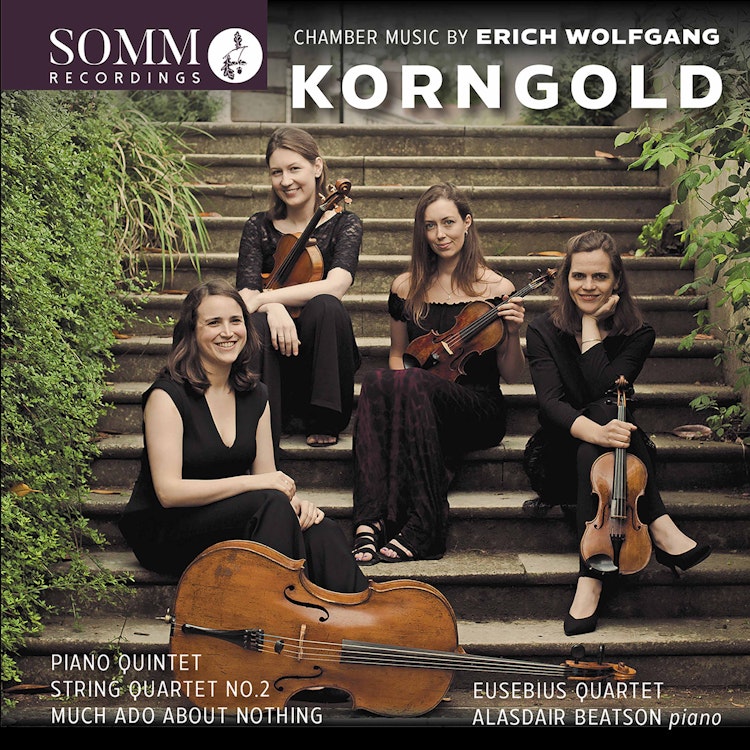
The Piano Quintet in E major, Op.15, is dedicated to deaf-mute sculptor Gustinus Ambrosi, a close friend whose bust of Korngold was destroyed by the Nazis.
Composer Biography
Korngold won two Academy Awards for his film scores, for "Anthony Adverse" in 1936 and "The Adventures of Robin Hood" in 1938, after his exile to Los Angeles due to the rise of Nazism.
Performer Biography
The Eusebius Quartet is named after one of Robert Schumann's fictional characters, representing the philosophical and dreamy mood, contrasting with the fiery Florestan.
Composer's Artistic Vision
For Korngold, chamber music offered a unique opportunity to create personal expressions and push the medium to quasi-orchestral effects, treating every instrument as a virtuoso.
Compositional Technique
The slow movement of Korngold's Piano Quintet contains a secret musical message for his fiancée, Luzi Sonnenthal, based on her speech intonation of "Erlauben Sie?" ('should I permit…?').
Historical Context
Korngold's Second String Quartet, Op.26, was the first of his works to be published in America rather than Germany, due to Hitler's rise to power in 1933 leading to a ban on Jewish composers' music.
Composer Biography
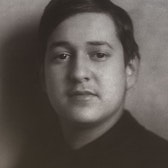
Erich Wolfgang Korngold, an Austrian composer, was a child prodigy admired by Mahler, Richard Strauss, and Puccini, who later became a pioneer of film scoring in Hollywood.
You might also enjoy...
Eduard Franck: String Quartet and Piano Quintet
Uncovered, Vol. 2: Florence B. Price
Janácek: String Quartets & Dvorák: Piano Quintet in A - Dumka
Undreamed Shores
Janácek: String Quartets Nos. 1 & 2; Berg: Lyric Suite