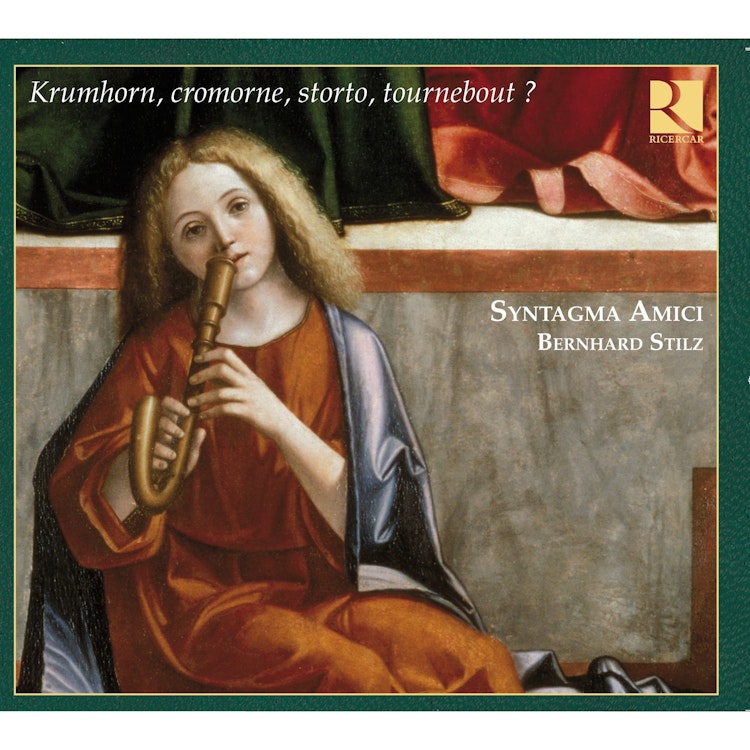
The crumhorn was popular for a relatively short period, from the late 15th century to the early 17th century, primarily in Germanic countries and Italy.
Interpretation
The musicians of Syntagma Amici, which translates to 'friends of their instruments', are dedicated to exploring the crumhorn's repertoire beyond its traditionally comical or grotesque roles.
Instruments
A unique feature of the crumhorn is its reed being enclosed in a windcap, preventing the player from directly manipulating it with their lips, similar to bagpipe reeds.
Instruments
The crumhorn's design limitations, such as a restricted range and inability to produce dynamic nuances or subtle attacks, likely contributed to its eventual decline.
Recording & Production
Most of the instruments used in this recording were built by Bernhard Stilz, a performer on this album, based on famous Italian crumhorns from the Musée des Instruments de Musique in Brussels.
Instruments
The crumhorn, also known as Krummhorn, storto, or tournebout, is a double-reed wind instrument typically made from maple with a cylindrical bore.