Friedrich Kuhlau, despite being nicknamed the 'Beethoven of the flute' for his extensive flute repertoire, hardly played the instrument himself, stating in 1813, 'I play this instrument only a little, but I know it perfectly'.
Composition History
Kuhlau's Grande Sonate Concertante in A minor was inspired by Mendelssohn's concert overture A Midsummer Night's Dream and Carl Maria von Weber's opera Oberon, which Kuhlau heard shortly before composing the sonata in 1827.
Historical Context
The late 18th and early 19th centuries saw widespread instability in Europe, which became a catalyst for dramatic transitions in literature, art, and music.
Composition History
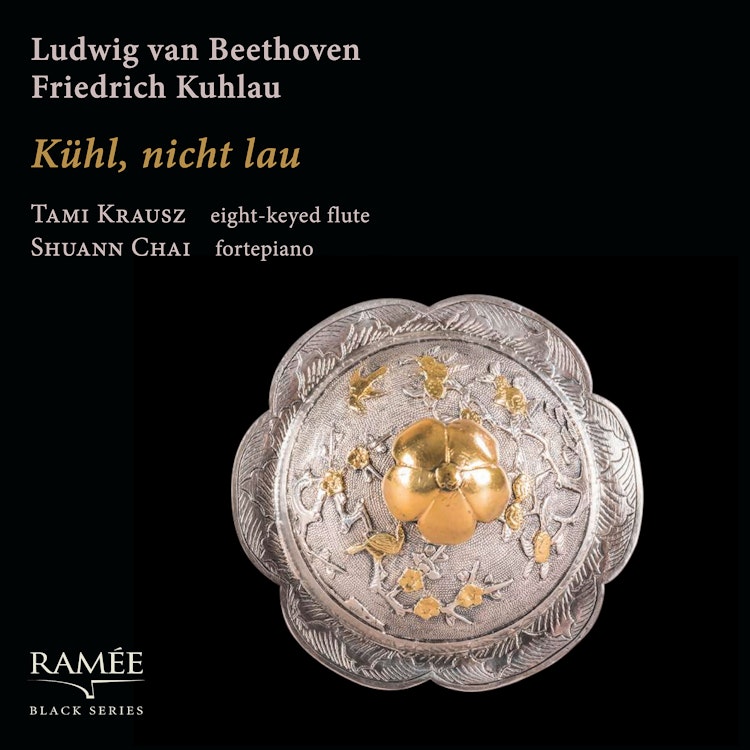
The album's title, 'Kühl, nicht lau' (cool, not lukewarm), is a friendly pun on Kuhlau's name from a canon Beethoven sketched for him after a convivial gathering in 1825.
Compositional Technique
The Rosenberger fortepiano used in this recording of Kuhlau's Grande Sonate Concertante features a 'Janissary stop', a drum-and-bell mechanism operated by a foot pedal, allowing for spectacular effects.
Instruments
During the early 19th century, both flutes and pianos underwent rapid innovations, leading to new possibilities in sonority and technique.
Composer Biography
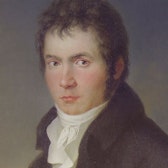
Friedrich Kuhlau, born in 1786, lost his right eye in a childhood accident, which led his parents to acquire a keyboard instrument for his distraction during recovery.
You might also enjoy...
The Cambridge Buskers Collection
Souvenir
Hibel, Bizub & Others: Solo Works for Flute & Clarinet
Tapestry (New Music from the Americas)
Paul Lansky: Touch and Go
Sierra: Clarinet Works
Timshel: The freedom of choice
The New Music, Vol. II
Piccolo et flûte à l'Opéra
Blockflutes 3
Les Amours d'un Rossignol - Musique pour le flageolet français