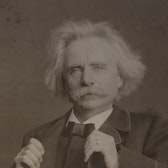
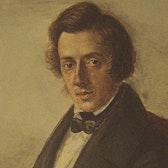
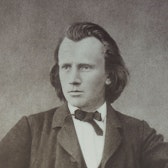
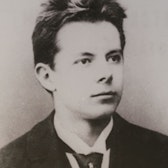
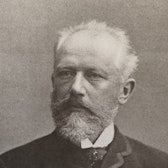
Even after the separation, composers like Tchaikovsky and Borodine continued to create explicitly for dance, leading to the golden age of ballet.
Compositional Technique
Before the 17th century, dance directly influenced most learned music, with musicians adapting dance rhythms to increasingly complex instrumental styles.
Historical Context
Dance and music were closely linked until 1661, when Louis XIV established the Royal Academy of Dance, officially separating the two art forms.
Composer's Artistic Vision
The album explores how dance has been a constant source of inspiration in classical music, from Chopin's Waltzes to Ravel's Boléro.
Historical Context
The true separation between music and dance occurred in the 19th century, as the technical virtuosity required in both arts made it difficult for one artist to excel in both.
Album & Artwork
This album illustrates the presence of dance in musical inspiration, featuring rondeaus, mazurkas, polonaises, and mambos, as well as pieces with more neutral titles that still contain dance-like pulsation.
Composer's Artistic Vision
Béla Bartók explored Eastern European folk heritage through popular dances, while French musicians like Bizet and Ravel reconnected with older dance forms.
You might also enjoy...
Spannende Krimiabende - Classical Music fo Thriller Evening
Beethoven Piano Concerto No. 5. Variations. Dvorák Symphony No. 8
Rachmaninoff: Greatest Hits
The Best of Turkish Piano Music
Rhapsody In Blue: Music Of Gershwin And Bernstein
Rhapsody in Blue: Music of Gershwin and Bernstein
20th Century Classics: Dukas
Mayer: Symphony No. 4, Piano Concerto, String Quartet & Piano Sonata