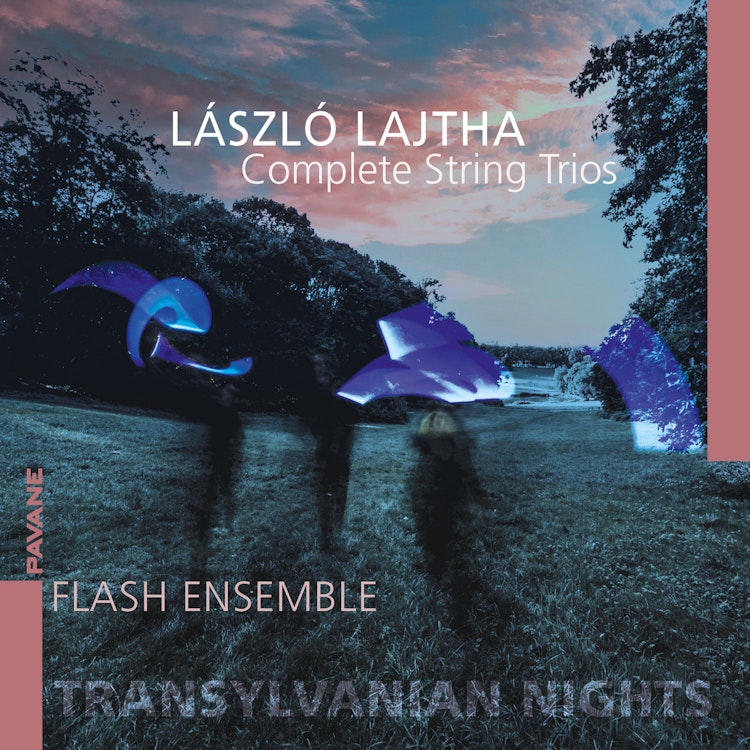
Lajtha's String Trio No. 3, 'Transylvanian Nights,' is deeply personal, with each movement describing the atmosphere of evenings in Transylvania, a region he considered home and from which much of his folklore material originated.
Compositional Technique
The String Trio No. 2 by Lajtha resembles a baroque sonata da chiesa in structure, with its first movement evoking both Bach's counterpoint and the sonority of Beethoven's late quartets.
Historical Context
Lajtha faced significant political and existential difficulties after 1948, including having his passport confiscated for over a decade and being forced to leave his directorship at the Conservatoire for refusing to associate with the communist government.
Composition History
Lajtha dedicated his String Trio No. 2 to French writer and pacifist Romain Rolland, seeing him as the 'conscience of Europe' who was becoming increasingly isolated.
Compositional Technique
In the final movement of String Trio No. 3, Lajtha uses a real folk melody adapted to classical style, accompanied by a written outcry 'Out of Transylvania!' with clear political overtones.
Composer Biography
László Lajtha, a Hungarian composer, ethnomusicologist, and teacher, studied composition at Budapest's Liszt Academy and briefly joined Béla Bartók's piano class.
Composer's Artistic Vision
Lajtha's main sources of inspiration were folk music, which he collected and published extensively, and contemporary French music.