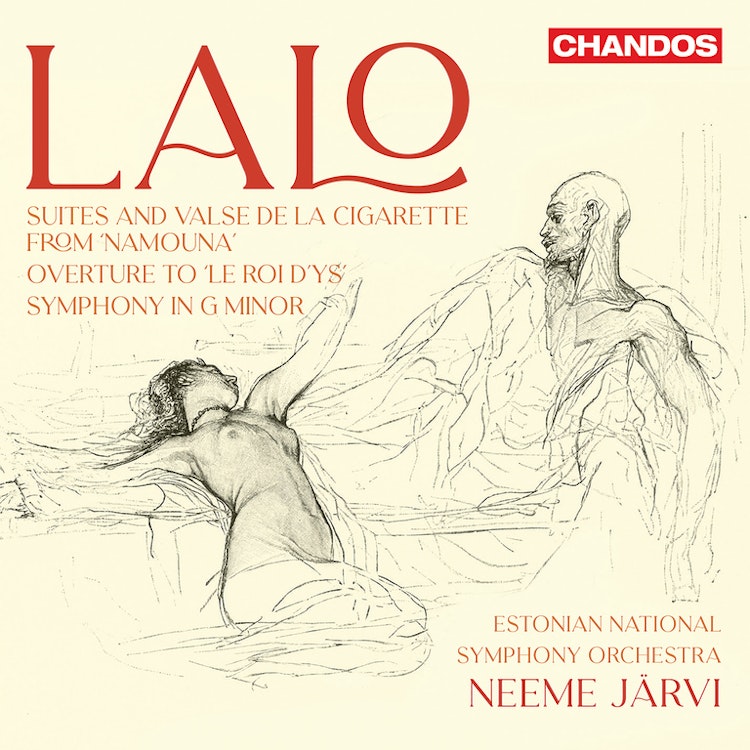
The premiere of Lalo's ballet 'Namouna' in 1882 was met with largely negative criticism, with many critics condemning him as a 'Wagnerian symphonist' due to prevailing anti-German sentiment.
Composition History
Lalo's famous works like the Symphonie espagnole, Fantaisie norvégienne, and Concerto russe were all written for the Spanish violinist Pablo Sarasate.
Historical Context
The catastrophic Franco-Prussian War of 1870-71 inspired the formation of the Société Nationale de Musique, led by Saint-Saëns, to promote music by living French composers.
Historical Context
Lalo was never a candidate for the prestigious Prix de Rome, an annual prize for composition students, because he only studied violin, not composition, at the Paris Conservatoire.
Composer's Artistic Vision
Lalo's musical style is described as forthright and vigorous, with a taste for chromatic harmony influenced more by Schumann than Chopin, and owing more to Beethoven than French predecessors.
Composer Biography
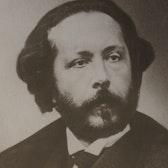
Édouard Lalo, though primarily considering himself an opera composer, earned his living in Paris playing chamber music as a violinist in the celebrated Armingaud Quartet.
Performer Biography
Neeme Järvi, the conductor on this album, is one of today's most esteemed maestros and has amassed a discography of nearly 500 recordings.
You might also enjoy...
Sir John Barbirolli - The Complete RCA and Columbia Album Collection
Beethoven: 9 Symphonies
Pancho Vladigerov: Stage Music
Debussy, Ravel & Falla
Carl Schuricht: Decca Recordings 1949-1956
Karajan Espectacular
Cherubini, Beethoven, Franck & Others: Orchestral Works (Live)
Klemperer Live in Cologne, Vol. 4 (Historical Recordings) [Live]
Bizet: Symphony in C Major & Carmen, Act III: Entr'acte - Milhaud: Suite Française - Ibert: Escales