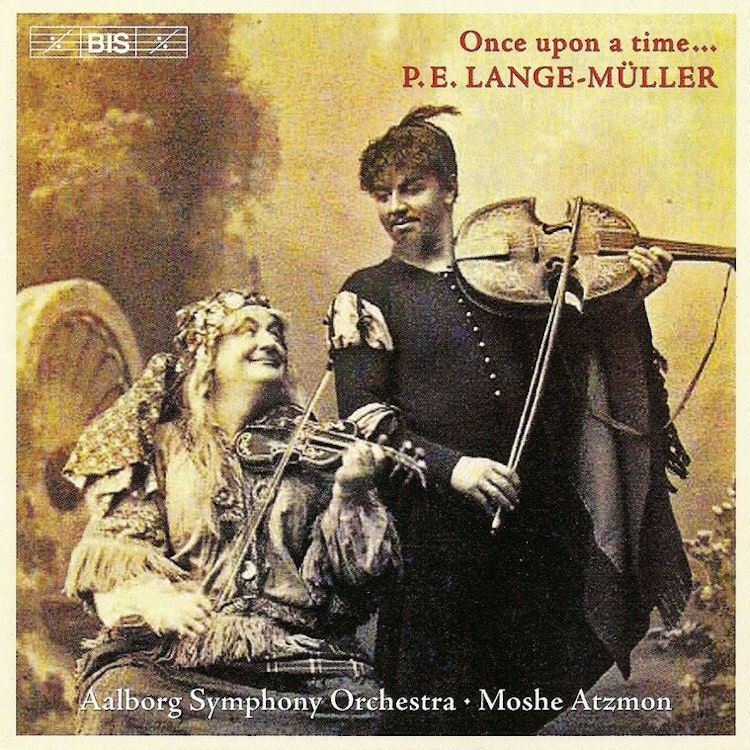
Lange-Muller: Der Var Engang / Renaissance / Sange Ved Havet (Excerpts)
6/1/2006, 21 Tracks, 1:09:05
Featuring
Moshe Atzmon
Susanne Elmark
Michael Kristensen
Johan Reuter
Søren Birch
Aalborg Symfoniorkester
Coro Misto
Peter Erasmus Lange-Müller
Did you know?
1/7
Historical Context
A 1940s recording of the 'Midsummer Song' by tenor Aksel Schiøtz gained immense popularity during the German occupation (1940-45) due to its patriotic message.
Composer Biography
Lange-Müller largely stopped composing in the last 25 years of his life, partly due to the negative reception of his opera 'Vikingeblod' and chronic headaches.
Performer Biography
Moshe Atzmon, the conductor, began his musical education in Hungary and Israel, studying cello, horn, conducting, and composition, and was a professional horn player for several years.
Cultural Impact
Lange-Müller's 'Midsummer Song' from 'Der var engang' became part of Danish cultural heritage, sung at traditional midsummer bonfires across the country.
Composer Biography
Peter Erasmus Lange-Müller (1850-1926) was largely self-taught as a composer, and his wealthy background allowed him to dedicate himself to music.
Recording & Production
This recording includes a world premiere of Lange-Müller's orchestration of a song from his Op. 64 collection, replacing a musically weaker song from Op. 54.
Critical Reception
Carl Nielsen, Denmark's leading composer, described Lange-Müller's music for the play 'Der var engang' as having a 'strangely glowing halo' that would remain with him for life.
You might also enjoy...
The Sound of Scandinavia
Sibelius (The Essential)
Ichihara: Italian Chamber Songs
Compositrices: New Light on French Romantic Women Composers