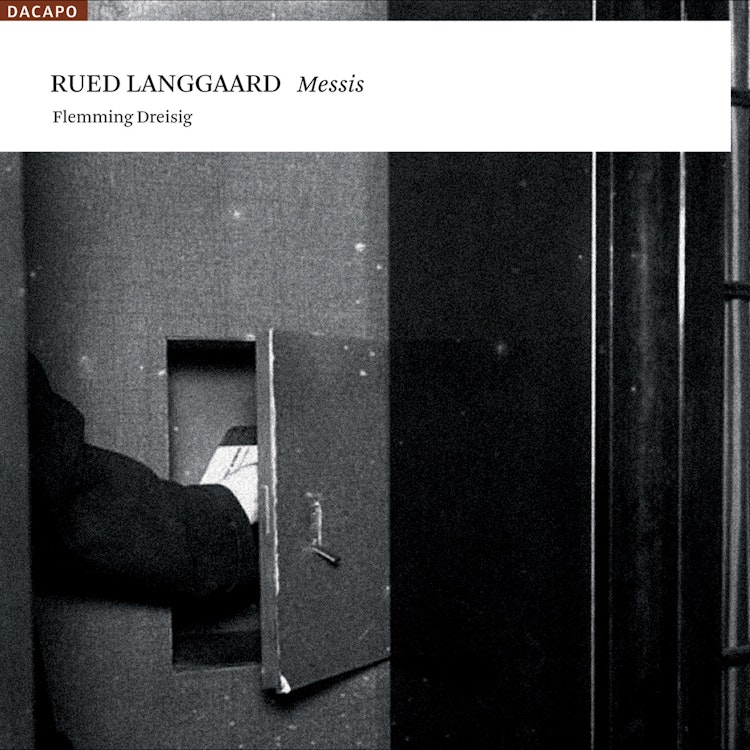
The title 'Messis' is Latin for 'harvest time' and refers to Christ's Parable of the Wheat and the Tares, symbolizing the end of the world.
Critical Reception
The premiere of the first two parts of Messis in Copenhagen Cathedral in 1936 received negative and dismissive press, and the composer was not allowed to present the final part there.
Composer Biography
Langgaard's hour-long First Symphony, completed in 1911, could not be performed in Denmark but premiered successfully in Berlin in 1913 with the Berlin Philharmonic.
Composition History
The organ trilogy Messis, with a total playing time of almost two hours, was the only major work Rued Langgaard completed between 1930 and 1940.
Compositional Technique
The third movement of Messis, 'Juan', borrows its rondo theme from the piano elegy 'Skoven sukker' (The Forest Sighs) composed by Rued Langgaard's father, Siegfried Langgaard.
Composer Biography
Rued Langgaard, the composer, was considered an outsider in Danish music due to his Late Romantic and Symbolist background, which clashed with the anti-Romantic views prevalent in Denmark during the interwar years.
Compositional Technique
In Messis, Langgaard freely uses the entire Romantic expressive range, contrasting almost banal music with harsh dissonances and violent eruptions.
You might also enjoy...
Olivier Messiaen: La Nativité du Seigneur (Eberhard Lauer an der Kuhn-Orgel St. Johannis Hamburg-Altona)
Bruckner 5 for organ
Enjott Schneider – Sacred Music Vol. 3
Widor: Complete Organ Works Vol. 2
Messiaen: Méditations sur le mystère de la Sainte Trinité, I/49
Mussorgsky, M.P.: Pictures at an Exhibition / 3 Movements From Petrushka
Messiaen: Complete Organ Works Vol. 4
Messiaen: La Nativité du Seigneur
Reger: Chorale Fantasias, Op. 52
Widor: Organ Symphonies Nos. 5 & 10
Karg-Elert: Complete Organ Works, Vol. 13
Tournemire: Sept Chorals-Poèmes d'Orgue pour les Sept Paroles du Christ
Messiaen: Les corps glorieux (À l'orgue de la Sainte-Trinité de Paris)