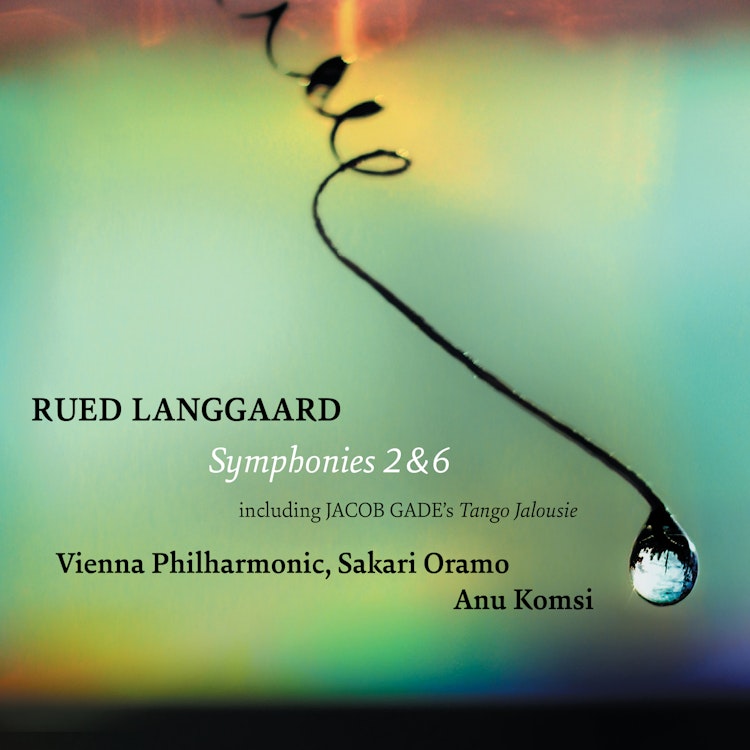
Langgaard's Symphony No. 2, 'Awakening of Spring', was criticized in Copenhagen as a 'monstrosity' but was met with great success in Germany and Austria.
Composer's Artistic Vision
Langgaard's music is characterized by episodic traits and a dichotomy between norms and unrest, reflecting the split between the real and spiritual world.
Composition History
Langgaard's Symphony No. 6, 'The Heaven-Rending', was a creative response to Carl Nielsen's radical Symphony No. 4, 'The Inextinguishable', sharing musical elements but with opposing aims.
Cultural Impact
Jacob Gade's 'Tango Jalousie', written for the silent film 'Don Q, Son of Zorro', became the most widespread Danish piece of music ever, based on its vast copyright earnings.
Compositional Technique
Symphony No. 6, 'The Heaven-Rending', is structured as a theme with variations, where the theme has two aspects, light and dark, symbolically representing Christ and Antichrist.
Recording & Production
Conductor Sakari Oramo performs the major violin solo in 'Tango Jalousie' on this recording, following the practice of the composer Jacob Gade, who performed as a 'Stehgeiger'.
Composer Biography
Rued Langgaard, a Danish late-Romantic composer, was largely unrecognized in his home country but achieved considerable acclaim for his works in Germany and Austria.