In 1581, a Jesuit named Walram Tummler visited the Bavarian court to critically examine liturgical and musical practices, noting that some musicians attended Divine Service wearing swords.
Compositional Technique
In the 16th century, musical compositions were not considered unchangeable; musicians frequently created instrumental arrangements, vocal 'parodies', and 'contrafacts' of existing works.
Cultural Impact
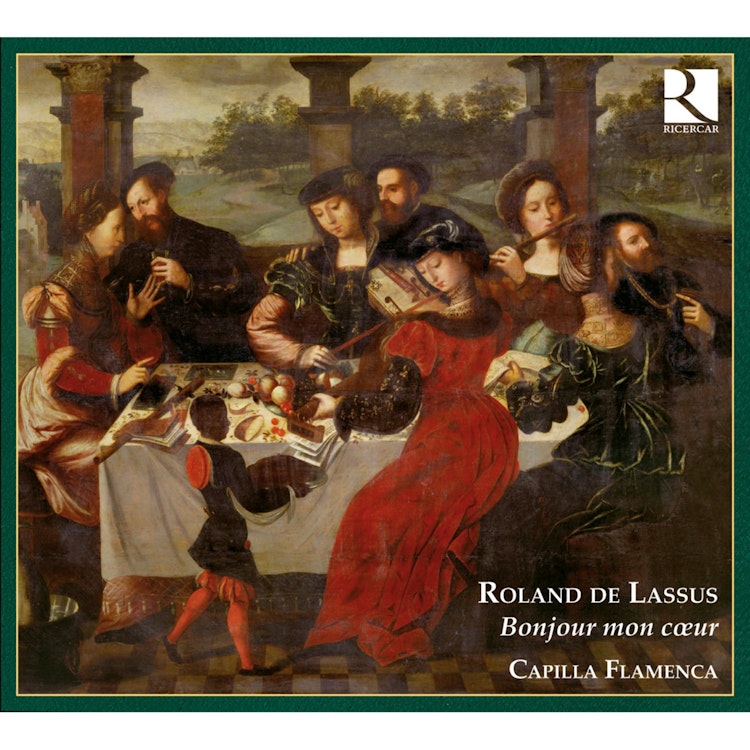
Lassus's chansons were so popular that even King Charles IX of France invited him to his court in 1571, possibly hoping to entice him away from the Duke of Bavaria.
Composition History
Under the influence of the Counter-Reformation at the Bavarian court, Lassus's later works shifted from humorous secular themes to more moralizing content, culminating in his Lagrime di San Pietro.
Composer's Artistic Vision
Roland de Lassus was criticized for publishing 'unseemly' books, referring to his French chansons which were considered too secular and explicitly erotic.
Composer Biography
Roland de Lassus, a Kapellmeister at the Bavarian court in Munich, was married, unlike musicians at the Papal court in Rome.
Critical Reception
The French Pléiade poet Pierre de Ronsard praised Lassus as 'le plus que divin Orlande,' stating he surpassed all predecessors and was 'the sole wonder of our time.'
You might also enjoy...
Willaert: Chansons, Madrigali & Villanelle
Les Travailleurs de la mer - Ancient Songs from a Small Island
Instruments of Middle Age and Renaissance
The Voice of Emotion
Commedia! Commedia!
Ganassi: La Fontegara
Homage To Johannes Ciconia (1370-1412)
Pontinen: Blue Winder / Milhaud: Concertino D'Hiver