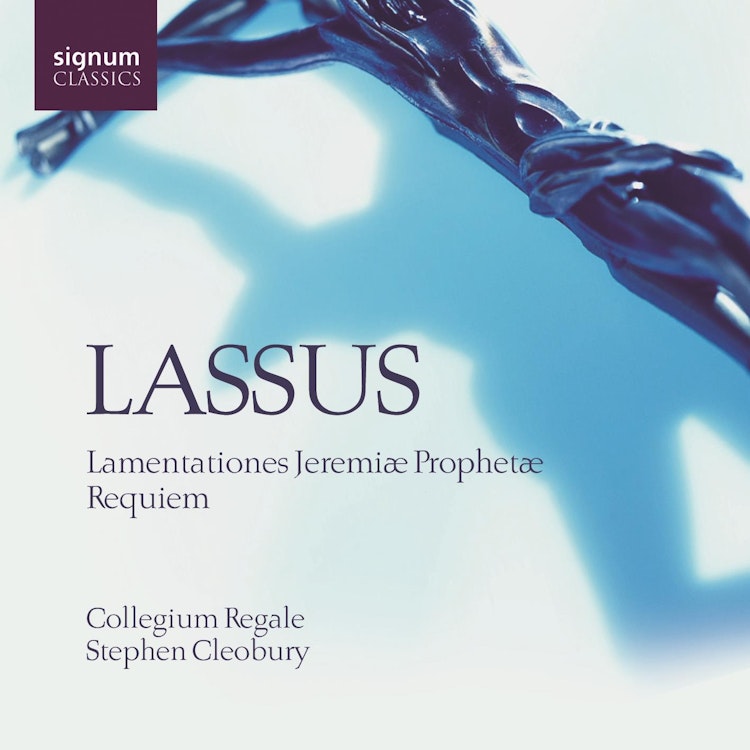
Collegium Regale, the Choral Scholars of The Choir of King's College, Cambridge, perform a repertoire spanning 800 years, from Gregorian chant to contemporary music.
Composer Biography
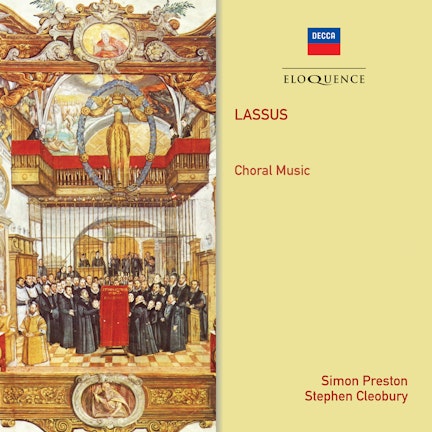
Orlande de Lassus (1532-1594) was considered the most celebrated composer in Europe during the last thirty years of his life, earning titles like 'prince of musicians' and 'the divine Orlande'.
Performer Biography
Stephen Cleobury, the conductor, is associated with two famous British choirs: Director of Music at King's College, Cambridge, and Chief Conductor of the BBC Singers.
Composer's Artistic Vision
The pieces on this recording represent Lassus's mature treatment of the theme of death, with the first group considering the death of Christ and the second, the death of the Christian.
Composer's Artistic Vision
Lassus's final motet, Vide homo, from his last work, reflects his deep personal spirituality and his contemplation of his own death by focusing on the death of Christ.
Compositional Technique
Lassus, famous for his madrigals, used 'madrigalism' or vivid word-painting to make the music mimic the meaning of the words, a technique he subtly carried into his sacred compositions.
Compositional Technique
In his Requiem, Lassus drew on traditional plainsong melodies, with the Introit featuring the chant in long notes in the second-highest voice, surrounded by counterpoint.