The manuscript was likely commissioned between 1514-1515, when Charles III of Bourbon was wealthy and on good terms with the French court.
Composer's Artistic Vision
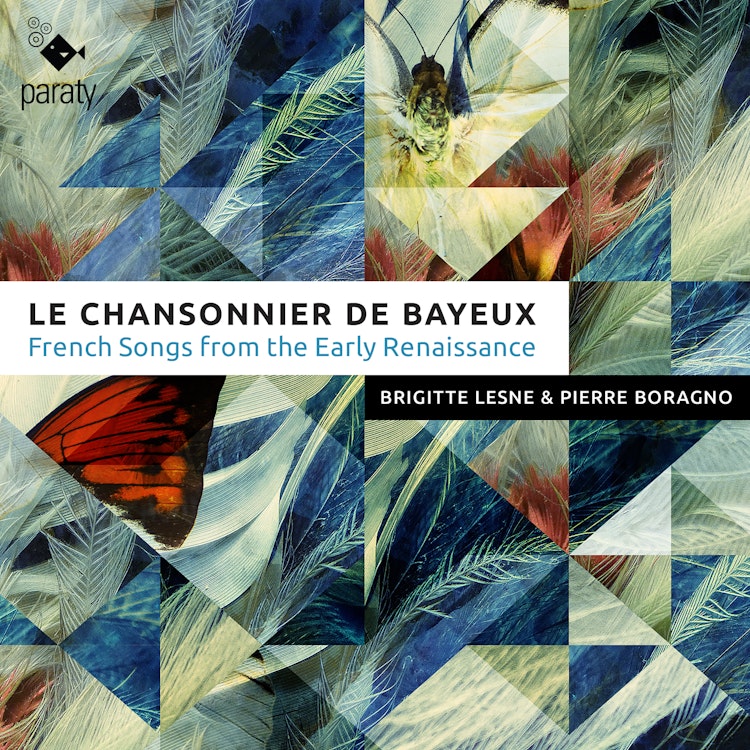
Unlike other songbooks of its time, the Chansonnier de Bayeux contains a hundred anonymous monodies on diverse topics, often bawdy, rather than courtly polyphonic songs.
Compositional Technique
The songs in the Chansonnier de Bayeux are 'disconcertingly plain melodies' that blend late medieval traditions with a modern simplicity, foreshadowing the 'air de cour'.
Historical Context
The manuscript, now known as the 'manuscript of Bayeux', was saved from being torn apart and used for binding by Édouard Lambert.
Interpretation
The performers chose a 'modest' approach to instrumentation, using instruments suitable for monody like hurdy-gurdy and bagpipes, as well as those for polyphony like recorders and shawms.
Performer Biography
Brigitte Lesne, a singer, directs two ensembles specializing in Medieval music, Discantus and Alla francesca, and teaches at several institutions.
Composition History
The Chansonnier de Bayeux was created for Charles III, Duke of Bourbon, a military leader who served both French kings and Emperor Charles V.
You might also enjoy...
Seaven Teares - Music of John Dowland
Toutes les nuits
Banchieri: Il Zabaione Musicale
Triompho de le done
Baston: Flemish and French Chansons
Heavenly Love, Earthly Joy - Elizabethan Lute Songs by John Dowland and Others