The album title, "Le Cœur & L'Oreille" (The Heart & The Ear), refers to two distinct harpsichord playing styles described by Le Gallois: one that touched the heart and one that touched the ear.
Compositional Technique
The Bauyn manuscript contains a variety of styles, including transcriptions of French lute music by Mesangeau and Pinel, alongside Froberger's Toccatas, which are influenced by the Italian keyboard school.
Composer Biography
Jacques Champion de Chambonnières, a dominant figure in French harpsichord music, was known for introducing new beauties and varied embellishments every time he played a piece.
Composition History
The Bauyn manuscript, a crucial source of 17th-century harpsichord music, was likely compiled between 1690 and 1706 to preserve music from the "golden age" of French harpsichord music from the 1650s.
Historical Context
Chambonnières was among the first composers to try and assert his intentions more explicitly in scores and limit unauthorized improvisation by performers, as noted in his 1670 "Pièces de clavecin."
Instruments
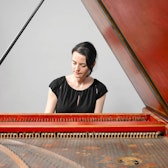
The harpsichord used for this recording was built in Paris in 1658 by Louis Denis and is one of the earliest surviving French double-manual harpsichords in playing condition.
Interpretation
The musical texts in the Bauyn manuscript are relatively unadorned, requiring the performer to add ornamentation, as described by Saint-Lambert in his 1702 treatise, "Les principes du clavecin."
You might also enjoy...
António Pereira da Costa: Concerti Grossi
Focus Baroque
J.S. Bach: Violin Concertos, Transcriptions for Organ
Storace, B.: Keyboard Music
Bach, J.S.: Ich steh an deiner Krippen hier
Soler : 6 Concertos for 2 Organs
Sackbutt
Le Plaintif
Jauchzet dem Herren: Psaumes de David au XVIIe siècle en Allemagne du Nord
Veni creator spiritus - Chor des Bayerischen Rundfunks
Telemann from the Estonian Baroque Soloists / Grigori Maltizov