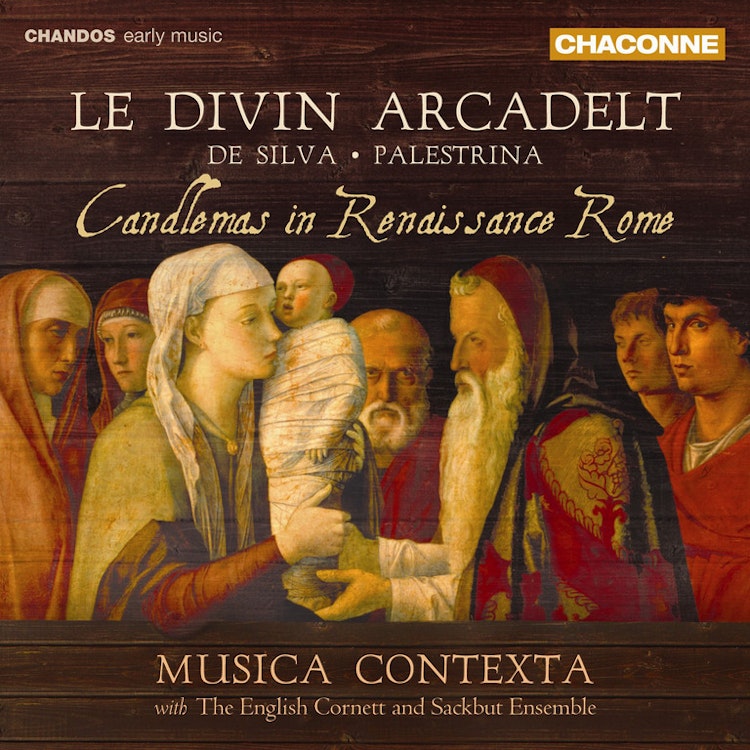
Andreas de Silva, whose movements are only accounted for between 1513 and 1522, served for two years as 'cantor et compositor' of the Cappella Sistina in Rome.
Composition History
Palestrina was commissioned by Pope Gregory XIII in 1577 to co-edit the Roman Gradual, aiming to modernize chant by removing 'superfluities, barbarities, and obscurities'.
Recording & Production
This album was recorded using 24-bit technology, which offers a dynamic range up to 48 dB greater and 256 times the resolution of standard 16-bit recordings.
Composer's Artistic Vision
Palestrina's music is noted for its clarity, but also for the emotional response he showed to his texts, as exemplified by his earlier work 'Senex puerum portabat'.
Composition History
Jacques Arcadelt's Missa 'Ave, Regina caelorum' is based on Andreas de Silva's motet 'Ave, Regina caelorum', a gesture that would have been considered a high compliment in the Renaissance.
Historical Context
In Renaissance Rome, musical influences were imported from various regions, with strong contributions from Iberian musicians (composers and performers) and northern France/Low Countries.
Interpretation
This recording does not attempt to reconstruct a single historical context, but rather takes Gregory Martin's ecstatic description of Roman church music as a starting point for exploring various performance possibilities.
You might also enjoy...
Tegnér & Nordqvist: Sång, vår sång!
125 Jaar: Mastreechter Staar
Three Wings
Choral Concert: Yl Male Voice Choir - Linkola, J. / Schubert, F. / Godzinsky, G. / Fougstedt, N. / Lindstrom, E. (Sulle Kauneimmat Lauluni Laulan)