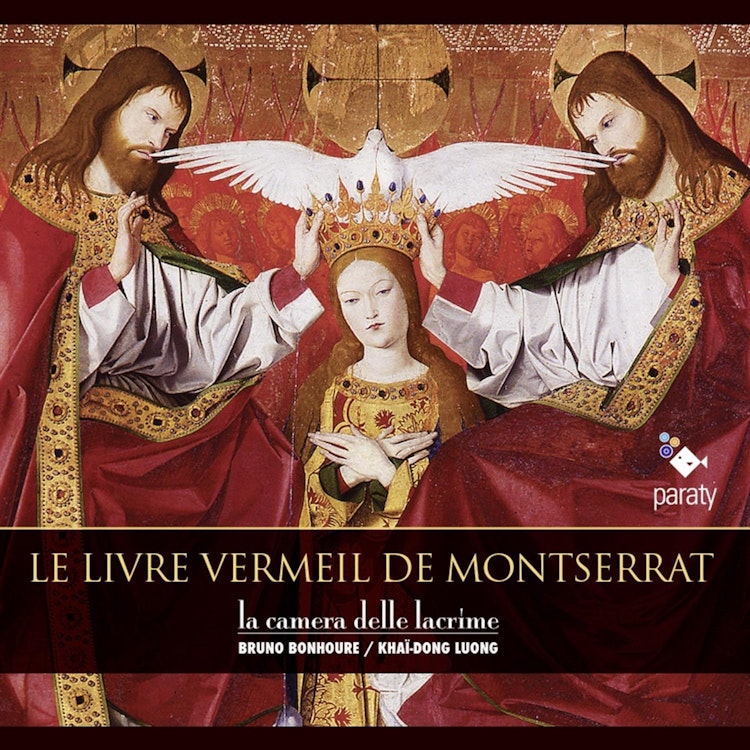
The Llibre Vermell contains songs intended to allow pilgrims to sing and dance during vigils, provided the songs remained decent and pious and did not disturb those in prayer.
Interpretation
This recording opens with the 13th-century Catalan version of the Song of the Sibyl and closes with the ancient version of the popular song Els segadors to emphasize Catalan identity.
Compositional Technique
The Llibre Vermell's songs exhibit stylistic heterogeneity, including monodies and polyphonies, with notations ranging from Ars Nova style to Gregorian square notes.
Historical Context
The monks of Montserrat created a unique repertoire of songs and dances to channel the pilgrims' festive energy into Marian devotion, balancing monastic, parish, and pilgrim life.
Composition History
The Llibre Vermell de Montserrat is a precious manuscript from the late 14th century, preserved in the Abbey of Montserrat's library, containing songs for pilgrims.
Cultural Impact
The Llibre Vermell de Montserrat manuscript was saved from destruction during the 1811 Napoleonic campaign because it was on loan to a Barcelonian scholar.
Album & Artwork
The manuscript is known as Llibre Vermell de Montserrat (Red Book of Montserrat) because the monks clothed it in a cover of wood and red velvet when it was returned to them.