The Kronborg motets were commissioned by the city council of Nuremberg to appease King Friedrich II of Denmark, who was upset about the delayed and costly Neptune fountain at Kronborg Castle.
Composer Biography
Lechner's early collection, Motectae Sacrae (Opus 1), immediately established him as a significant composer, and his works were highly valued and quickly disseminated, even being intabulated for organ.
Compositional Technique
The monumental 24-part epithalamium Quid Chaos, composed for three choirs of eight parts each, is considered one of the most extravagant musical works of the 16th century.
Cultural Impact
The fountain described in Lechner's Kronborg motets, the Labenwohl fountain, was looted by the Swedes in 1659 and disappeared, possibly recast into bells or cannonballs.
Composer Biography
Leonhard Lechner, the composer, was likely from South Tyrol and was recruited as a boy for the Munich court chapel, where he studied under Orlando di Lasso.
Compositional Technique
Lechner's six-part setting of the fountain poem In Laudem Regii Fontis is a masterpiece of tone painting, depicting splashing fountains and the ascension of water with octave leaps.
Composition History
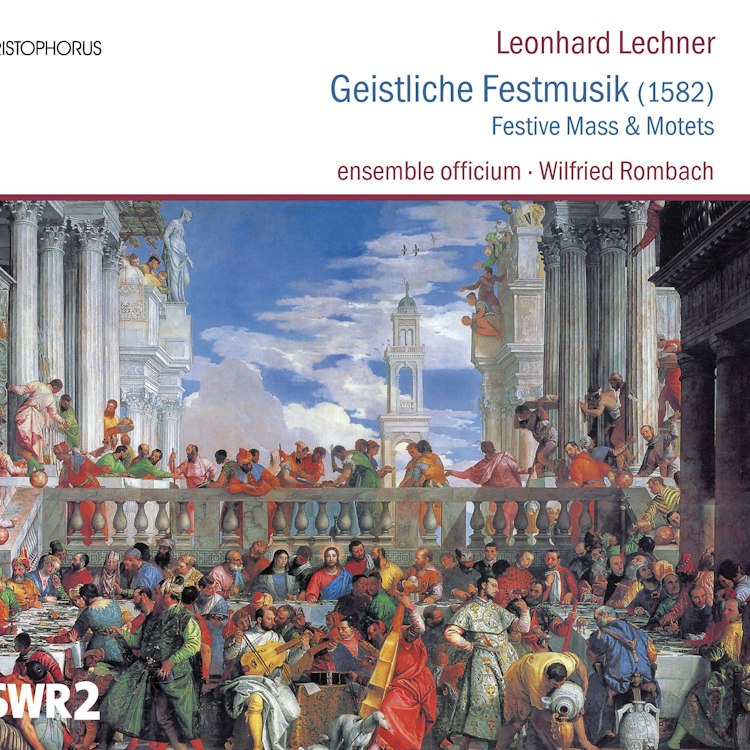
Lechner's Missa Domine Dominus noster was composed for the wedding of Nuremberg patrician Sebald Welser and Magdalena Imhoff in 1582, a wealthy merchant family with close ties to Venice.
You might also enjoy...
Aleotti: Le Monache di San Vito
Pâques à Notre-Dame
Adriano 6
Music of the Reformation
Rosslyn Chapel - Songs of Praise and Inspiration
Perillo's Magnificat
Jubilate - Music for the Kings and Queens of England
Palestrina: Missa Aeterna Christi munera - Missa Brevis