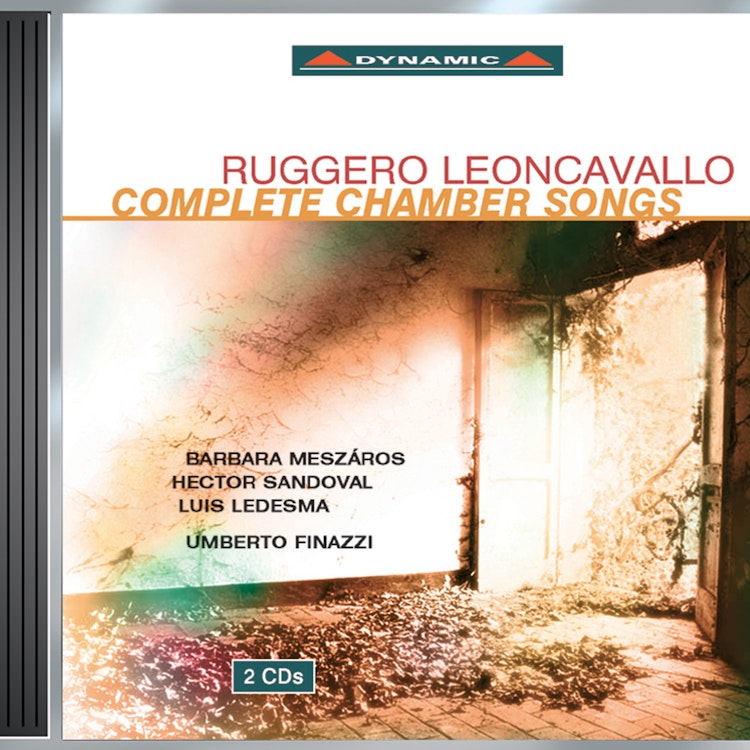
Leoncavallo's drawing-room romances rarely show traces of Verismo, instead leaning towards more intimate and twilight attitudes, suggesting his opera I Pagliacci's Verismo was a concession to fashion.
Composition History
Many of Leoncavallo's romances became known after 1892, following the success of his opera I Pagliacci, which led European publishers to seek out his shorter vocal pieces.
Cultural Impact
Enrico Caruso's recording of Mattinata was one of the greatest recording successes of all time, selling millions of copies worldwide.
Compositional Technique
The four lyrics in Leoncavallo's Album Stecchetti, published in 1880, served as a model for his future chamber lyrics, focusing on vocal melody with elegant piano accompaniment.
Notable Performances
Leoncavallo's famous romanza Mattinata was written for Enrico Caruso, who made the world-premiere gramophone recording of it in Milan on April 8, 1904, accompanied by Leoncavallo himself.
Historical Context
The drawing-room romance genre experienced a boom in Italy after national unification, coinciding with economic expansion and the rise of a middle class that owned pianos.
Composer Biography
Francesco Paolo Tosti, a composer born in Ortona in 1846, wrote about 500 romances for voice and piano but never a single opera.
You might also enjoy...
Togetherness: Works for Soprano & Piano
Brahms / Wagner: Lieder
Rheinberger: Lieder und Duette mit Klavier
Italian Songs and Ballads
Where Only Stars Can Hear Us: Schubert Songs
Vocal Recital: Stavad, Hanne - Monteverdi, C. / Mozart, W.A. / Schubert, F. / Brahms, J. / Norgard, P. / Mahler, G.