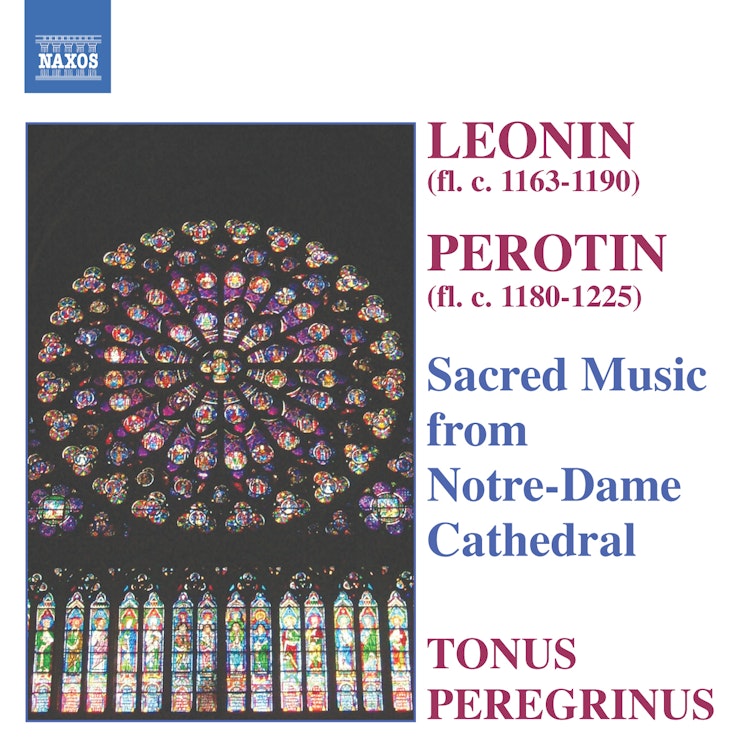
LEONIN / PEROTIN: Sacred Music from Notre-Dame Cathedral
1/1/2006, 32 Tracks, 1:10:03
Featuring
Antony Pitts
Tonus Peregrinus
Perotinus
Anonymous
Leoninus
Anonymous (13th century)
Did you know?
1/7
Compositional Technique
The two-part music from Notre-Dame, known as 'organum duplum' and associated with Léonin, either slowed down the plainchant for a soloistic line ('organum purum') or rhythmicized it into a 'modal' system ('discantus').
Composer Biography
Pérotin made a new edition of Léonin's 'magnus liber' and added his own massive polyphonic versions of two Gradual chants, likely for feast-days in 1198 and 1199.
Recording & Production
This recording was made at Chancelade Abbey, Dordogne, France, from January 5th to 9th, 2004.
Compositional Technique
Early polyphony was constructed by adding a drone (a held note) or by singing the same plainchant at a fixed interval, as demonstrated in the ninth-century treatise 'Scolica enchiriadis'.
Composer Biography
Léonin, a master of polyphonic composition, is believed to have been responsible for the original 'magnus liber organi' (great book of organum) for Notre-Dame.
Compositional Technique
The foundation of the repertoire in the 'magnus liber organi' is plainchant, which are unmeasured melodies associated with every liturgical moment in the Church's calendar.
Historical Context
The music on this album was written for Notre-Dame Cathedral in Paris, a building project that spanned several generations from its cornerstone laying in 1163.
You might also enjoy...
Choral and Orchestral Music
Gabrieli: Missa brevis 4 vocum
Cesena: Songs for popes, princes & mercenaries
Choral Concert: Studenter-Sangforeningen (Gaudeamus Igitur - Student Songs and Drinking Songs)