The album explores the integration of wind instruments, particularly oboes and bassoons, into the musical institutions of the French court: the Académie royale, the Chapelle du Roi, and the Chambre du Roi.
Instruments
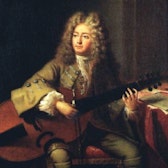
Instrument makers and instrumentalists Philidor and Hotteterre adapted oboes and bassoons by making them longer and thinner, refining their sound, and making them more chromatic to blend with violins and violas da gamba.
Composition History
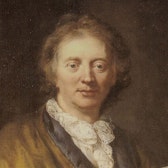
François Couperin's "Concerts Royaux," published in 1722, were written for small chamber concerts and performed for the aging Louis XIV almost every Sunday.
Instruments
Oboes and bassoons initially had a powerful sound and incisive timbres, making them difficult to blend with other court ensembles, as they were constructed to play at a much higher pitch.
Composition History
Oboes first appeared in Lully's orchestra in the Ballet de l'Amour malade in 1657, possibly as prototypes of baroque instruments or as 'cromornes' that had already undergone significant transformations.
Historical Context
In the 17th century, the Chambre du Roi (King's Chamber) evolved, with instruments like the lute, spinet, and viol players, and singers, but violins did not play a leading role.
Recording & Production
This album is an imaginary concert in the King's Chamber, organized as a musical summary of the King's day, inspired by Philippe Beaussant's book "Le Roi-Soleil se lève aussi."
You might also enjoy...
Telemann: Per la tromba & Il corno da caccia
Vocal Recital: Vitzthum, Franz - Rigatti, G.A. / Biber, H.I.F. / Ferdinand Iii / Legrenzi, G. / Bach, H. / Funck, D. / Geist, C. / Ahle, J.R.
J.C Bach: De Aeternitate
Adventures In Early Music
Louis XIV
German Baroque Sacred Music: Christmas
Italian Baroque Music Edition
Biber, Locke, Zelenka: Battalia/Music for the Tempest, Fanfare
Zelenka, Biber & Locke : Various Works
Complete Tranquility
O Jesulein... A German Baroque Christmas Oratorio
Villanelle, Balletti et altre musiche di varia sorte