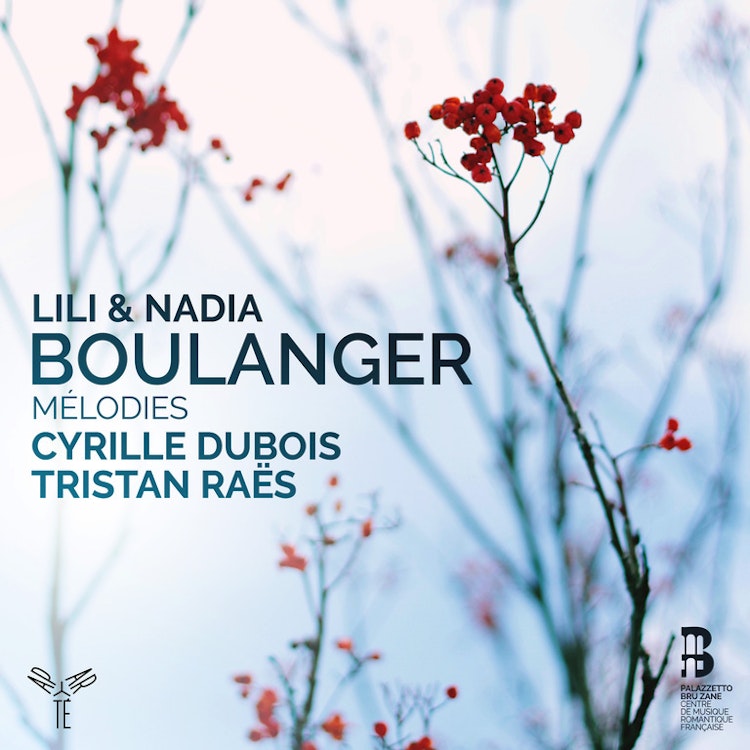
The sisters Nadia and Lili Boulanger were both precocious compositional talents in early 20th-century France, but Lili died aged just 24, and Nadia subsequently stopped composing and devoted herself to teaching instead. On this album, tenor Cyrille Dubois and pianist Tristan Raës perform works by both composers in the French tradition of the mélodie.
Featuring
Cyrille Dubois
Tristan Raës
Nadia Boulanger
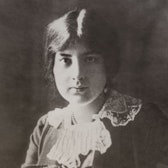
Lili Boulanger
Did you know?
1/7
Composer Biography
Lili Boulanger (1893-1918) was the first woman to win the prestigious Prix de Rome in 1913 with her cantata Faust et Hélène.
Composer's Artistic Vision
The Boulanger sisters are considered worthy heirs of their mentor Gabriel Fauré, yet their harmonic and contrapuntal world is uniquely personal.
Composer Biography
Nadia Boulanger (1887-1979) gave up composition for good after the death of her sister Lili, whom she considered more gifted than herself.
Composition History
The song cycle Les Heures claires was genuinely co-written by Nadia Boulanger and Raoul Pugno, a pianist and composer, between April and August 1909.
Compositional Technique
Lili Boulanger's Quatre Chants demonstrate her early mastery of a personal harmonic language, blending modal colors, chromatic progressions, and touches of bitonality.
Historical Context
Nadia Boulanger's mélodie Soir d'hiver, written during wartime (1914-1915), aims to express faith in victory and justice.
Performer Biography
The duo of Cyrille Dubois and Tristan Raës discovered Nadia and Lili Boulanger over ten years ago during a competition named after the Boulanger sisters.
You might also enjoy...
Dapoz: Alalt a ci (Arr. Schuen for Voice and Piano)
Pettersson: Barfotasånger
Kosma: Les feuilles mortes (Arr. Leuenberger for Tenor and Piano)
Emmanuel: Songs of Burgundy
Emmanuel: Songs of Burgundy
Krenek: Reisebuch aus den österreichischen Alpen; Fiedellieder
Songs of Wintter Watts
Killmayer: Heine-Lieder
Mistica (Italian vocal chamber music by Luigi Guida)
Hauer: Music with Hölderlin & Piano Pieces, Op. 25