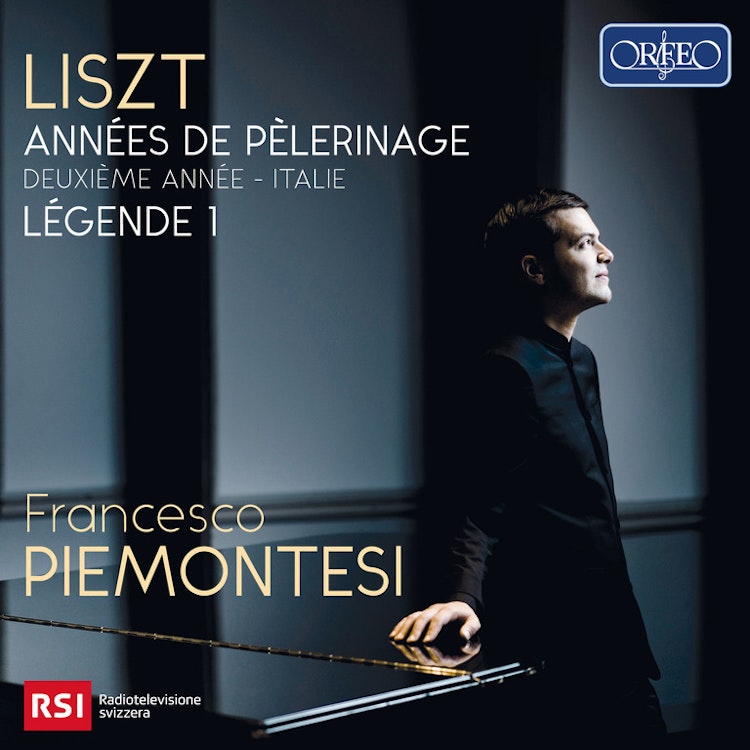
Swiss pianist Francesco Piemontesi continues his journey through Liszt's three-part Années de pèlerinage (Years of Pilgrimage) series with 'Italy', the second part. Recalling Liszt's own years travelling in Italy, the seven movements are variously inspired by artists including Raphael and Michelangelo, and the sonnets of Petrarch, and culminate in the famous 'Dante Sonata'.
Featuring
Francesco Piemontesi
Franz Liszt
Did you know?
1/7
Performer Biography
Francesco Piemontesi, the pianist on this recording, is known for his technical perfection, rich tonal palette, and refined expression, and is considered one of the most outstanding pianists of our time.
Composition History
The second volume, "Deuxième année: Italie" (Second Year: Italy), was the first of the three Années de Pèlerinage cycles to be written, between 1837 and 1849, reflecting Liszt's impressions from Italian art and literature.
Composer's Artistic Vision
A key aspect of Liszt's work is his exceptional ability to illustrate extra-musical ideas through music, translating images and stories into piano pieces.
Composer Biography
Franz Liszt, the composer, received lower orders in Rome in 1865, after which he made appearances in a clerical collar and black habit.
Compositional Technique
Liszt's "Sposalizio" (Marriage of the Virgin) is based on Raphael's 1504 painting of the same name, with its simple main theme and rich coloration directly corresponding to the painting's figures and vibrant colors.
Compositional Technique
The 'Dante Sonata', titled "Après une lecture du Dante, fantasia quasi sonata", is the largest piece in the second volume of Années de Pèlerinage and blends sonata and fantasy forms, inspired by Dante Alighieri's "Divine Comedy".
Composition History
The Années de Pèlerinage (Years of Pilgrimage) are a central cycle in Liszt's oeuvre, containing 26 character pieces that serve as musical diary entries from his travels.
You might also enjoy...
Liszt: Années de pèlerinage / Years of Pilgrimage, I: "Suisse"
Liszt: Harmonies poétiques et religieuses, S. 173
Liszt: Annes de pelerinage
Liszt: Consolations, S. 172: No. 2 in E Major. Un poco più mosso