Franz Liszt, influenced by Lamennais, felt a strong religious calling from ages 15 to 18, stating his convictions included belief in his heart, God, and Freedom.
Compositional Technique
Liszt's 'Dante-Sonata' (Après une lecture du Dante) is written in D minor, like Mozart's 'Don Giovanni' Overture and Schubert's 'Death and the Maiden', but concludes in D major, symbolizing salvation.
Composition History
Liszt's 'Funérailles' (Funeral) was not an homage to Chopin, but a reaction to the bloody repression of the Hungarian revolution by Austrian forces in October 1849.
Performer Biography
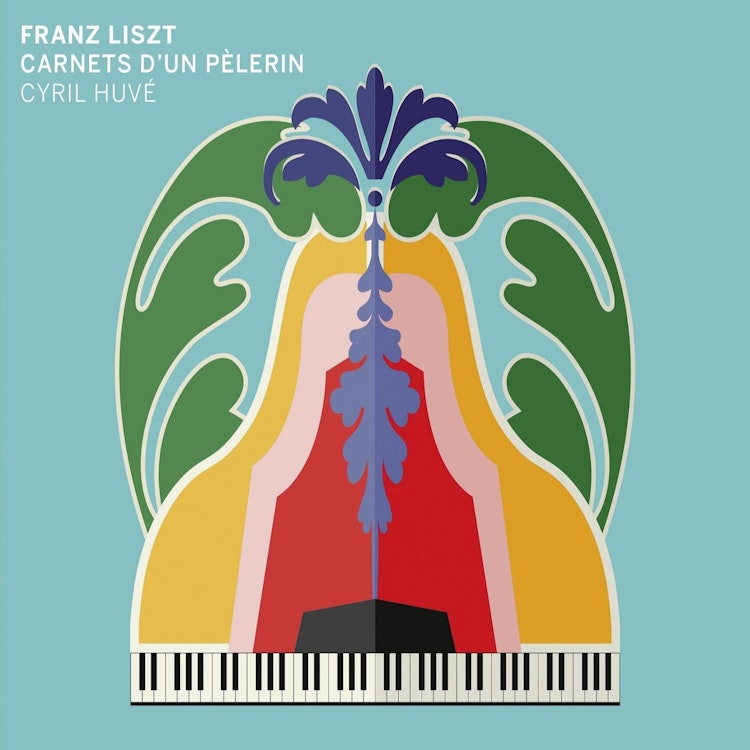
Cyril Huvé, the pianist on this recording, was a disciple of Claudio Arrau, who considered him "one of his best continuators," and also received teaching from György Cziffra.
Recording & Production
The recording took place at 'La Grange aux Pianos' (The Pianos' Barn), a collection of historical pianos belonging to Cyril Huvé, located near George Sand's house in Nohant.
Instruments
The founder of Steinway & Sons, Heinrich Engelhard Steinweg, originally built 482 pianos in Germany before emigrating to the United States and establishing his new company.
Instruments
The piano used for this recording is an 1875 Steinweg, a brand associated with the later period of Liszt's life and his Weimar masterclasses.
You might also enjoy...
Franz Liszt Transcriptions of Franz Schubert Songs
Liszt: Piano Works Vol. 2 - Schubert Song Transcriptions
Liszt: Piano Works
Summit
Bartók: Piano Works
Larcher, Schumann & Bartók…For Children
Kurtág: Játékok, Selections from Volumes 1-4
…for Children: Piano Works by Larcher, Schumann & Bartók
Schubert-Liszt Lieder, Vol. 2
Schubert: Sonata D.960 / Schubert/Liszt
Kfr - Almanach 2002 & 2004 (Schumann, Liszt & Kurtag) [Bonus CD , Live recordings]
Kfr: Almanach 2002 & 2004 (Schumann, Liszt & Kurtag)