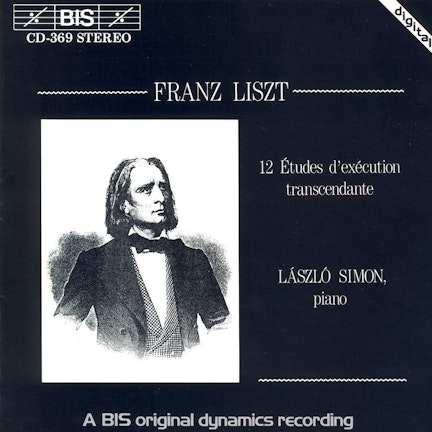
Liszt: Complete Piano Music 34 – 12 Grandes Études
5/10/2024, 13 Tracks, 1:16:23
Featuring
Leslie Howard
Franz Liszt
Did you know?
1/7
Composer's Artistic Vision
Liszt based these studies on music composed in his childhood, aiming to explore musical expression through complete technical accomplishment, which he considered the first principle of great études.
Compositional Technique
The 1837 studies often have a different character from the later 1851 set, partly due to different tempo indications and specific instructions for tempo rubato, for which Liszt devised his own symbols.
Recording & Production
The track "Morceau de salon Étude de perfectionnement, S142 (1840)" is a first recording.
Critical Reception
Robert Schumann, a German composer and critic, enthusiastically reviewed Liszt's 'Twelve Great Studies' but lamented that only Liszt himself would be able to play them due to their technical demands.
Composition History
Liszt completed his 'Twelve Great Studies' in October 1837, and they were published the following year.
Compositional Technique
The 1851 version of Liszt's 'Douze Études d'exécution transcendante' are essentially simplifications of the 1837 set, with cuts, recastings, and added titles.
Composer Biography
Liszt dedicated the 1837 Studies, like their later versions, to Carl Czerny, his former teacher, with the opening piece serving as a dedicatory flourish.
You might also enjoy...
Reves
Mephisto Waltz No. 1, The Dance in the Village Inn, for Piano solo, S.514
Liszt : 12 Etudes d'exécution transcendante [Transcendental Studies]