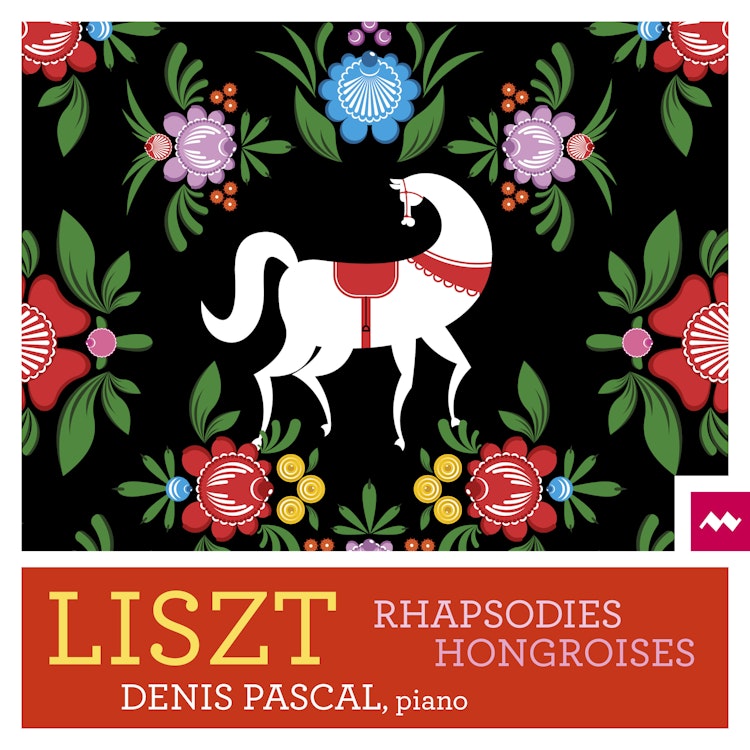
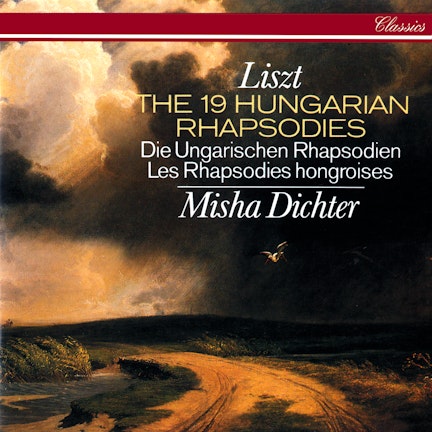
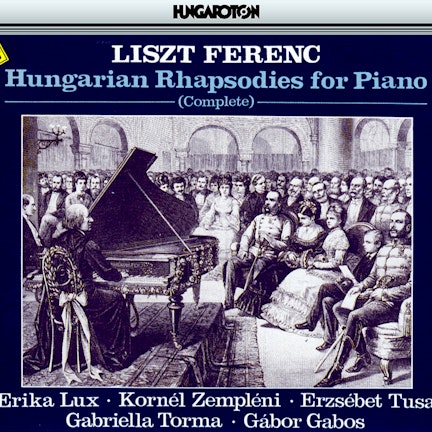
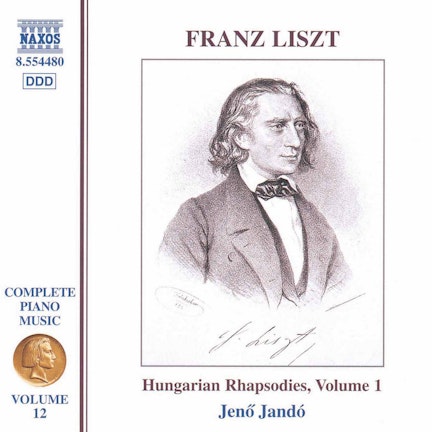
The 19 Hungarian Rhapsodies by Franz Liszt originally appeared as "Magyar Dalok" (Hungarian Melodies).
Compositional Technique
The final version of Liszt's Hungarian Rhapsodies features a precise, demanding writing style, adhering to classical composition codes, with no room for improvisation.
Critical Reception
A controversy arose when Liszt claimed in his book 'Des Bohémiens et de leur musique en Hongrie' that Hungarian music belonged to the Gypsies, not the Hungarians.
Composer Biography
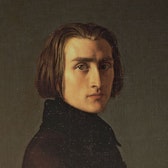
Franz Liszt, born in Raiding in 1811, was fascinated by Gypsy music and culture from the age of six.
Performer Biography
Denis Pascal, the pianist on this recording, is a student of Pierre Sancan and also studied with Jacques Rouvier, Léon Fleisher, and György Sándor at the Conservatoire National Supérieur de Musique in Paris.
Composer's Artistic Vision
Liszt's instrumental writing in the Rhapsodies evokes various instruments like the voice, violin, percussion, cimbalom, and tárogató, as well as the improvisatory style of the Romungre of Transylvania.
Critical Reception
The Hungarian Rhapsodies were initially met with enthusiasm across Europe between 1848 and 1853, quickly becoming well-known works.