Liszt, a deeply religious and mystical figure, viewed death not as an end, but as the 'cradle of the life to come'.
Composition History
Liszt's Totentanz (Dance of Death) was inspired by Holbein's engravings of The Dance of Death and Buffalmacco's frescoes of The Triumph of Death in Pisa.
Composer Biography
Franz Liszt's later works, which explored beyond traditional tonality, were described by Richard Wagner as 'folie en germe' (the seed of madness).
Critical Reception
Liszt's Csárdás macabre was initially refused by his publisher and was not published until 1952, despite Béla Bartók's attempt to publish it in 1912.
Compositional Technique
In Totentanz, Liszt uses musical effects such as rumbling bass, clattering cadences, macabre trills, and glissandi to depict skeletons dancing and the Grim Reaper.
Performer Biography
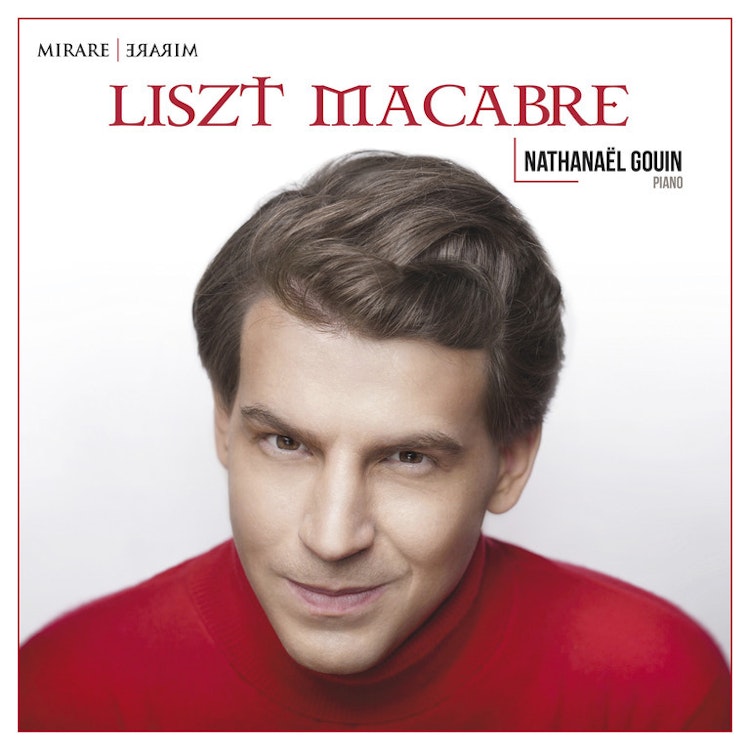
Nathanaël Gouin, the pianist on this album, began studying both piano and violin at the age of three.
Cultural Impact
Liszt's Csárdás macabre, with its violent and phantasmagorical dance, has been taken up by contemporary Death Metal bands.
You might also enjoy...
Prokofiev: Sonata No.6 / Liszt, Saint-Saëns
Fauré en héritage
Kaleidoscope
John Ogdon - The Complete RCA Album Collection
Palmgren: Complete Piano Works, Vol. 1
Whispers and Thunder
Festival international la roque d'anthéron 2008
My Polish Reflection: Diverse Polish Piano Works
Copland, A.: 4 Piano Blues / Piano Sonata / Gershwin, G.: 3 Preludes / Songs