Elisa Tomellini plays the formidable fourth Étude at a tempo that aims to approach the speed of the original violin piece, unlike other recordings that adopt a more relaxed pace.
Compositional Technique
Liszt's third Étude, "La Campanella," in its 1838 version, incorporates musical references not only from Paganini's Concerto No. 2 but also from the final movement of his Concerto No. 1.
Composition History
Franz Liszt's Six Études d'exécution transcendante d'après Paganini, first published in 1838, were so difficult that he revised them in 1851 to mitigate their extreme challenges.
Composer's Artistic Vision
Liszt was inspired by Niccolò Paganini, a phenomenal violin virtuoso, who embodied the romantic ideal of 'reaching beyond' physical limits and striving for the impossible.
Compositional Technique
The fourth Étude in E major, based on Paganini's first Caprice, is described as an "almost unplayable piece" that severely tests a performer's digital, concentration, and muscular endurance skills.
Critical Reception
Robert Schumann, a contemporary composer and critic, described Liszt's Paganini Études as "perhaps the most difficult work ever written for the piano."
Performer Biography
Elisa Tomellini, the pianist on this album, is noted as one of the few pianists capable of performing Liszt's 1838 version of the Paganini Études, which is considered prohibitively difficult.
You might also enjoy...
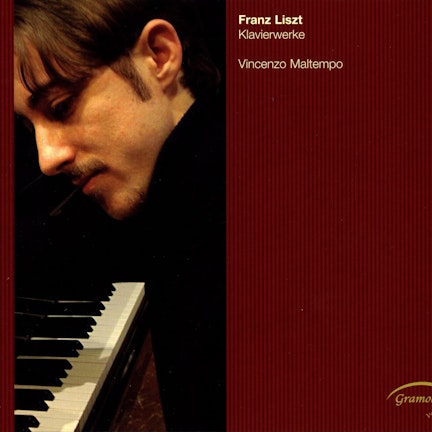
Liszt: Klavierwerke
Beethoven, L. Van: Symphonies (Arr. F. Liszt for Piano), Vol. 1 (Biret) - Nos. 1, 2
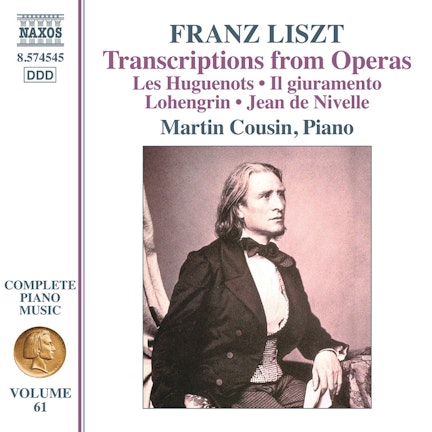
Liszt: Opera Transcriptions
Liszt: Donizetti Opera Transcriptions
Liszt: Piano Recital
Liszt: Operatic Transcriptions
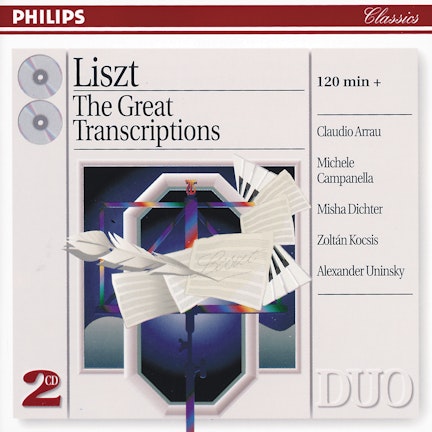
Liszt: The Great Transcriptions
Liszt: An Orchestra on the Piano
Wagner & Verdi - 1813-2013 - Piano transcriptions by List & Tausig
Un monde Fantastique
Liszt Hexaméron and Réminiscences of Lucrezia Borgia and Norma
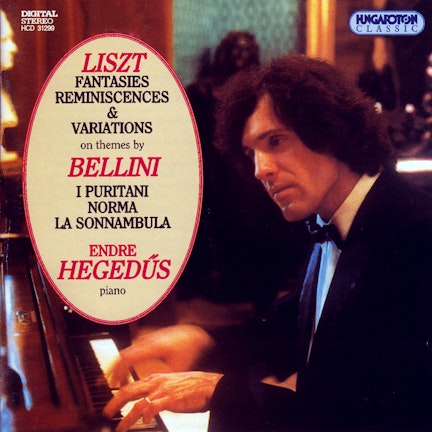
Liszt: Fantasies, Reminiscences and Variations On Themes by Bellini