Liszt's E flat Concerto was famously panned by influential critic Eduard Hanslick, who derisively called it 'the triangle concerto' due to its prominent use of the instrument.
Composer Biography
Between 1840 and 1847, Franz Liszt, the composer, performed over 1000 concerts across Europe before giving it all up to become kapellmeister of the Duchy of Weimar.
Compositional Technique
Liszt's 'double-function' method is evident in the E flat Concerto, combining the four traditional movements of a symphony into a single, uninterrupted entity.
Composer's Artistic Vision
Liszt intended his B minor Sonata to be a work of 'pure music,' a demonstration that he could write an extended piece without a programmatic title or story, comparable to Beethoven's greatest piano works.
Composition History
Both of Liszt's piano concertos, which had been conceived years earlier, were largely completed during his second year as kapellmeister in Weimar.
Compositional Technique
Both of Liszt's concertos exemplify his technique of thematic transformation, where large-scale structures are built from subtle manipulations of a few themes.
Notable Performances
The first performance of Liszt's E flat Concerto in 1855 featured Liszt himself as soloist and Hector Berlioz, a renowned French composer, as conductor.
You might also enjoy...
Liszt: Piano Concertos 1 & 2, Sonata in B Minor
Sparklight
Liszt: Works for Piano & Orchestra
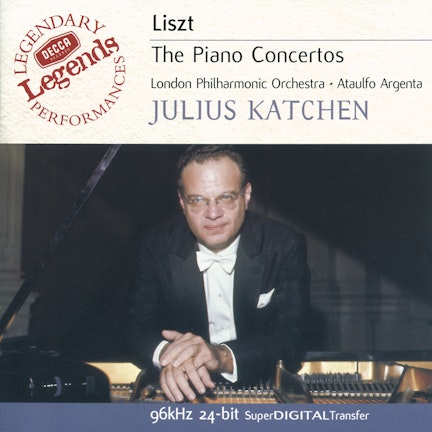
Liszt: The Piano Concertos
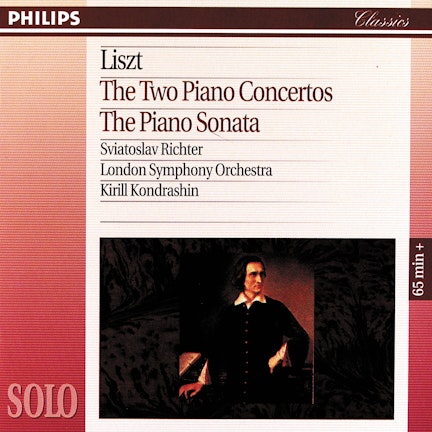
Liszt: The Two Piano Concertos/The Piano Sonata
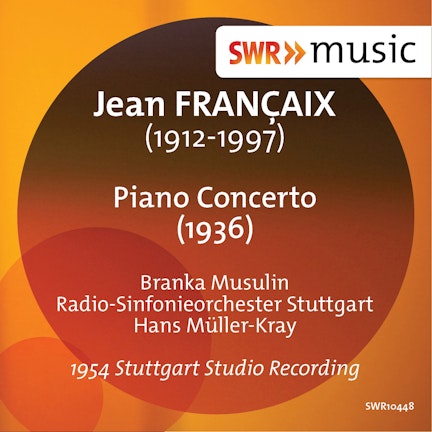
Françaix: Piano Concerto
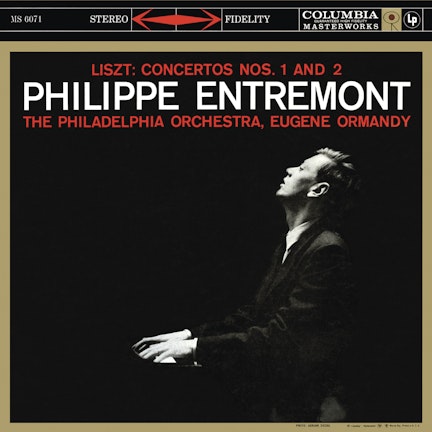
Liszt: Piano Concerto No. 1 in E-Flat Major, S. 124, R. 458 & Piano Concerto No. 2 in A Major, S. 120, R. 456
Eymard, Manu Martin: Lim Cosmic Rhapsody for Piano and Orchestra, Act III: II. Come Orbit with Me