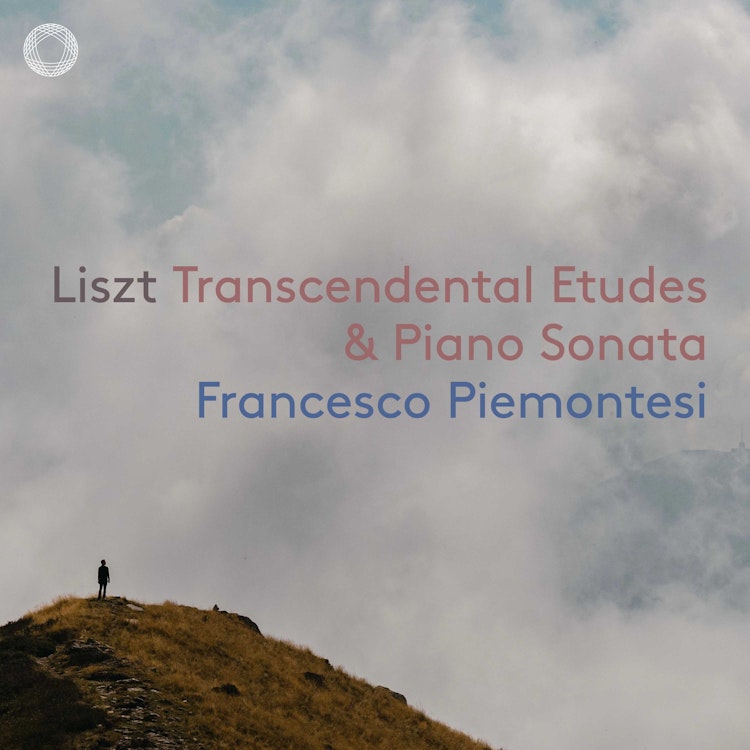
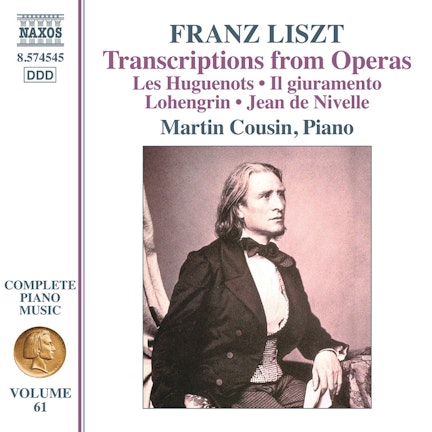
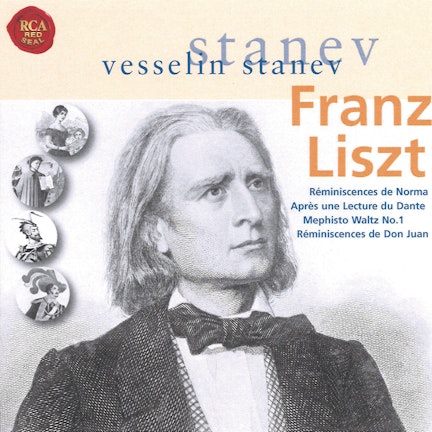
Liszt's B Minor Sonata, considered his most revolutionary piano piece, was composed in 1852/53 immediately after the final version of the 'Etudes'.
Composer Biography
In 1848, the celebrated piano virtuoso Franz Liszt settled in Weimar, aiming to direct the opera house and focus on composing.
Critical Reception
The B Minor Sonata was premiered by Hans von Bülow in Berlin in 1857, but contemporary critics, like Eduard Hanslick, tore it to shreds, calling it a "wild rant (...) against everything that is musical."
Composition History
The 'Transcendental Etudes' were originally written by a 27-year-old Liszt as twelve etudes à la Czerny, then revised in 1837/38 as 'Grandes Études', and finally reshaped in 1851 with evocative titles.
Compositional Technique
The 'Transcendental Etudes' are no longer merely technical piano practice pieces but fully-fledged concert pieces, alternating acrobatic highlights with lyrical moments.
Composition History
Liszt dedicated his B Minor Sonata to Robert Schumann, returning the favor after Schumann had dedicated his Fantasy in C major from 1839 to Liszt.
Composer's Artistic Vision
Liszt believed that "only the poet among composers is able (...) to break inhibiting fetters and to expand the boundaries of his art," viewing music as a "narrative of inner processes."
You might also enjoy...
Liszt: Piano Works
Liszt: 12 Études d'exécution transcendante
Visions of Liszt
Worlds of Liszt
Liszt: Famous Piano Works
Liszt Piano Works
Liszt: Opera Transcriptions
Tokarev plays Liszt - His Early Recordings
Liszt: Mephisto-Walzer, Chasse-neige, Ricordanza, Gaudeamus igitur, Jeux d'eau à la Villa d'Este...