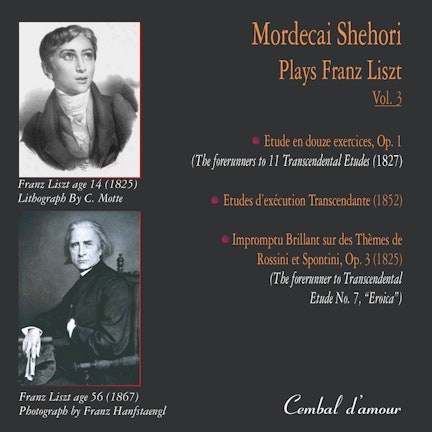
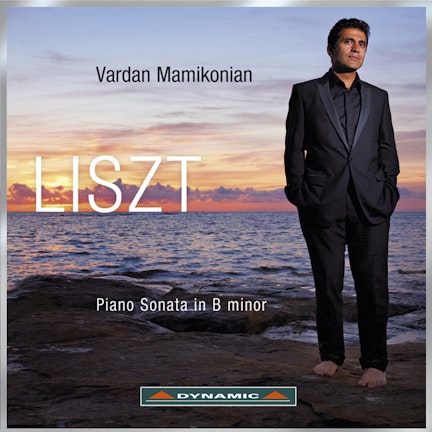
Franz Liszt, one of the first musical superstars, was inspired to become a piano virtuoso after hearing Niccolò Paganini play the violin in 1832.
Recording & Production
This album was recorded in June 2018 at the Concert Hall, Wyastone Estate, Monmouth, UK, and features a Fazioli piano.
Composition History
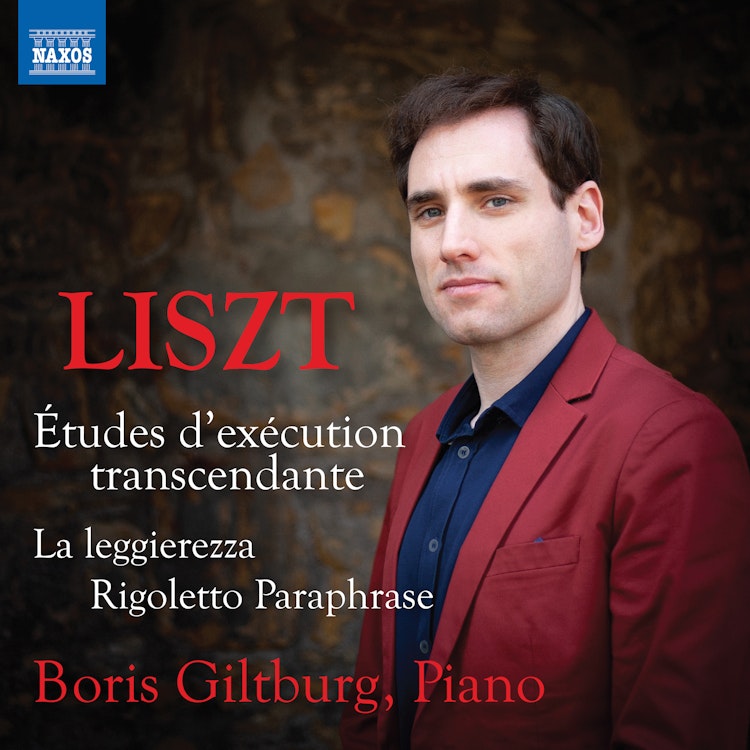
Liszt's 12 Études d'exécution transcendante underwent two major revisions, with the final 1852 version, recorded here, being the one Liszt referred to as 'the only authentic' one.
Composer's Artistic Vision
Liszt's Études d'exécution transcendante are not just technical exercises but also aim to bridge musical inspiration and methodical instruction, with the title meaning 'Studies for Superlative Execution.'
Cultural Impact
Liszt invented the solo piano concert format, which he named the 'recital,' and his performances caused such a frenzied reaction that Heinrich Heine described it as 'Lisztomania.'
Performer Biography
Boris Giltburg, the Moscow-born Israeli pianist, won First Prize at the prestigious Queen Elisabeth Competition in 2013, which significantly advanced his career.
Compositional Technique
Liszt's Études d'exécution transcendante use piano technique for storytelling, such as the tremolos in 'Chasse-neige' depicting a snowstorm or arpeggios in 'Mazeppa' illustrating a wild horse.