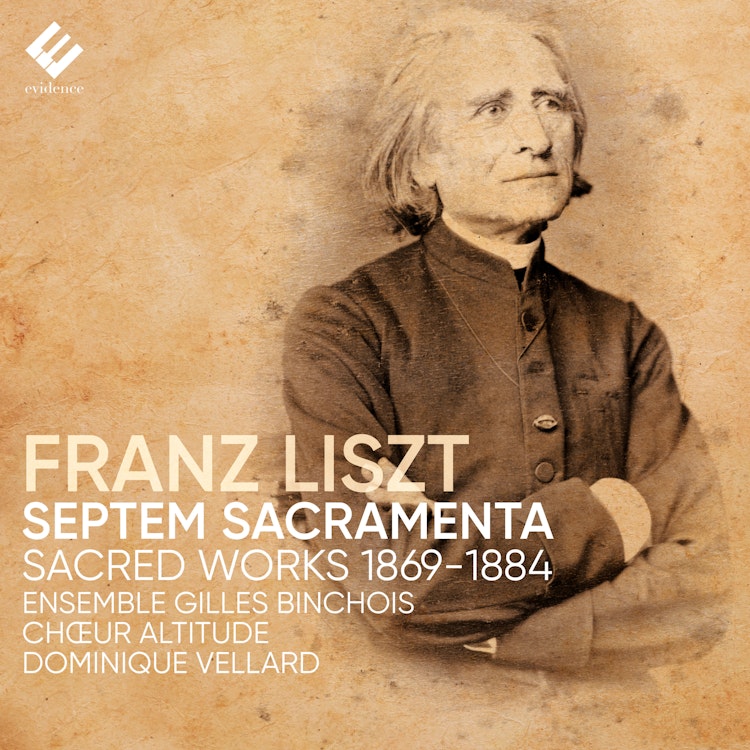
The harmonium, featured on this album, was patented in 1842 by piano maker Alexandre Debain, who also built the 1874 instrument heard here.
Composer Biography
From 1856, Liszt viewed his compositional activity as that of a priest and preacher, eventually moving to Rome, joining the Third Order of St. Francis of Assisi, and receiving Minor Orders.
Composer Biography
Liszt's religious output includes 68 works, such as four masses, a Requiem, two oratorios, and numerous choruses for liturgical use.
Composer's Artistic Vision
Liszt aimed to find the essence of music to put it at the service of worship, as seen in his work Septem Sacramenta, which features harmonic daring beyond conventional Cecilian principles.
Recording & Production
The choice to use only the harmonium for this album, rather than being pragmatic, stems from a deep artistic conviction that it mutually supports and enhances the other musicians.
Composer Biography
Franz Liszt, though lauded as a pianist and influential composer, is less known for his sacred music, which he considered his dearest work.
Composer's Artistic Vision
Liszt believed that the arts were the surest way to escape from the world, and also the surest way to be united with it.
You might also enjoy...
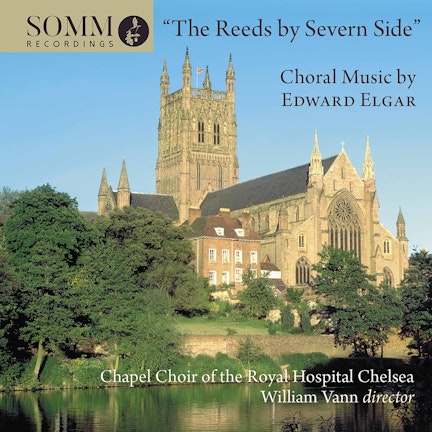
The Reeds by Severn Side
Saint Saens: Weihnachtsoratorium
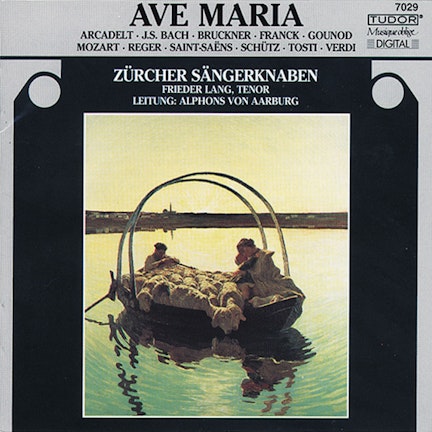
Choral Concert: Zurich Boys Choir - Bach, J.S. / Gounod, C.-F. / Bruckner, A. / Franck, C. / Verdi, G. / Schutz, H. / Mozart, W.A.
Wesley, S.S.: Anthems
Elgar: Ave Maria / Give Unto the Lord / Te Deum and Benedictus, Op. 34
Mitten wir im Leben sind
Mitten wir im Leben sind. Romantische Musik für Männerchor
Christmas Celebration
Christmas Celebration
Hear My Prayer
Joy To The World
Ihr Kinderlein kommet (Der Dresdner Kreuzchor singt die schönsten Weihnachtslieder)