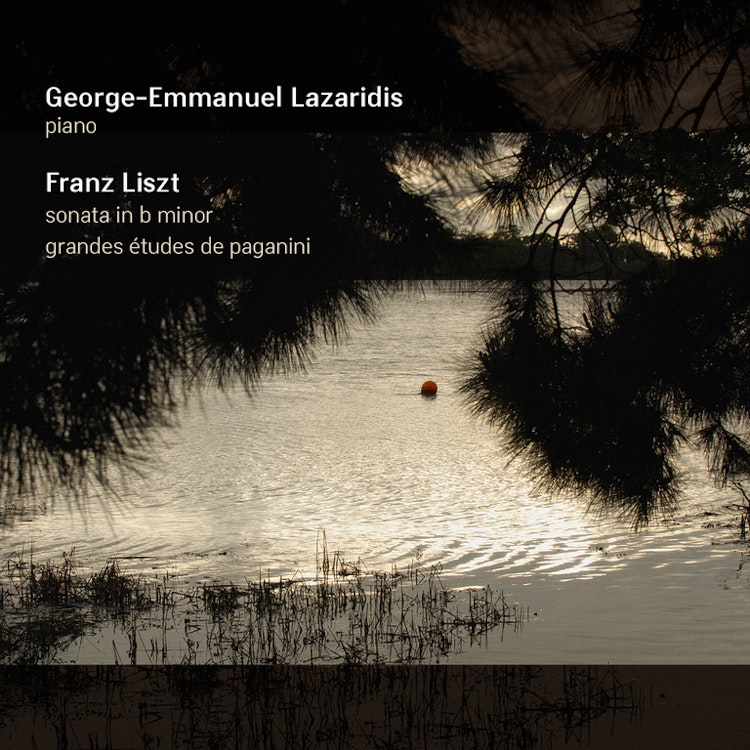
Liszt: Sonata in B Minor and Grandes études de Paganini
7/1/2008, 7 Tracks, 57:53
Featuring
George-Emmanuel Lazaridis
Franz Liszt
Did you know?
1/6
Composition History
Liszt's Grandes études de Paganini are transcriptions of Niccolò Paganini's 24 Caprices for solo violin, originally written between 1802 and 1817.
Critical Reception
Liszt's Piano Sonata in B minor received highly divergent critical opinions; Richard Wagner called it "beautiful beyond all conception," while Clara Schumann found it "gruesome" and Johannes Brahms dismissed it as "just empty noise."
Compositional Technique
Liszt's Piano Sonata in B minor is a groundbreaking work, notable for its continuous single-movement structure, combining traditional sonata form elements with internal logic and organic growth.
Compositional Technique
The opening page of Liszt's Piano Sonata in B minor introduces three striking "motto" ideas that serve as seeds for nearly all the subsequent musical development.
Recording & Production
This album was recorded at The Maltings, Snape, UK, between May 15-18, 2006, and produced by Philip Hobbs.
Composer Biography
Franz Liszt, at 21 years old, was inspired by the virtuosity of violinist Niccolò Paganini to redefine the technical and expressive potential of the piano.
You might also enjoy...
Liszt: Piano Works (Live)
Liszt: Piano Transcriptions
Arrau spielt Liszt
Récital Liszt: Méphisto-valse, Rapsodie espagnole, Grand galop chromatique...
A Liszt Recital
Liszt: Rakoczi March / 4 Marches by Schubert / Grand Concert Piece