Franz Liszt, the composer, was considered a "born revolutionary" and showed great sympathy for revolutionary movements and social justice, particularly in his youth.
Composer's Artistic Vision
Liszt believed artists should "bolster the courage of the weak and to moderate the sorrows of the oppressed," rather than glorifying the rich.
Performer Biography
Arnaldo Cohen, the pianist on this recording, began his musical studies at age five and also worked as a professional violinist in the Rio de Janeiro Opera House Orchestra while studying engineering.
Composition History
Liszt dedicated his work 'Funérailles' from the 'Harmonies poétiques et religieuses' to the victims of the European revolutionary years of 1848/49.
Critical Reception
The B minor Sonata was initially controversial, with critic Eduard Hanslick calling it a "chaotic mania" and a "bloody struggle against everything that is musical."
Performer Biography
Arnaldo Cohen won first prize in the 1972 Busoni International Piano Competition in Italy.
Compositional Technique
Liszt's B minor Sonata is a single-movement work that avoids traditional three- or four-movement forms, presenting a complex structure where sonata form and sonata cycle overlap.
You might also enjoy...
Exclusive: International Franz Liszt Piano Competition – First Prize Mariam Batsashvili (2014)
Franz Liszt: Metanoia
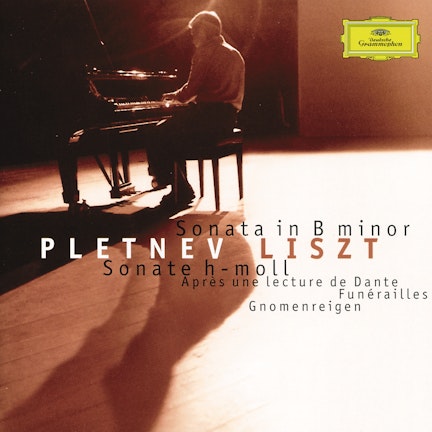
Liszt: Piona Sonata in B Minor / Après une lecture de Dante / Funérailles / Gnomenreigen
Klaviersonate H-moll, Gnomenreigen, Funerailles
Liszt: Works for Piano
Liszt, F.: Piano Music
Liszt: Dreams of Love; Consolations; Sonnets of Petrarca; Rigoletto Paraphrase
Piano Recital 1986: Watts, Andre
Liszt: Recital
Liszt: Piano Works
Kfr - Almanach 2002 & 2004 (Schumann, Liszt & Kurtag) [Bonus CD , Live recordings]