Liszt often blended varied stylistic tools in his songs, such as bel canto vocal lines, unaccompanied recitative, orchestrally conceived piano textures, and unresolved harmonies.
Compositional Technique
Liszt was the first Western composer to use the whole-tone scale, and his late compositions show him experimenting with non-diatonic tonality.
Performer Biography
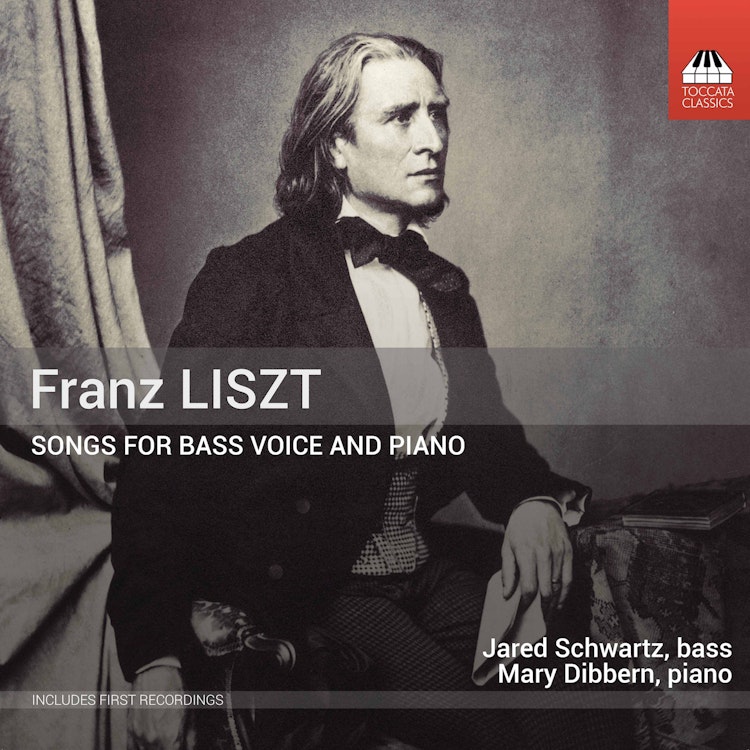
Jared Schwartz, the bass on this recording, had his first album for Toccata Classics, 'Gabriel Fauré: Songs for Bass Voice and Piano,' reach No. 7 on the Billboard Traditional Classical Music Chart.
Performer Biography
Mary Dibbern, the pianist, is an internationally known specialist in vocal coaching and accompaniment, and has been Music Director of Education and Family Programs at The Dallas Opera since 2012.
Composer's Artistic Vision
Liszt's musical settings, described as 'songs of immense and staggering beauty,' did not conform to the expected styles of German Lied or French mélodie of his time.
Composer Biography
Franz Liszt is unique among major 19th-century composers for setting songs to poems in six languages: German, French, Italian, Hungarian, Russian, and English.
Cultural Impact
Liszt's entire body of work, including his hundred or so songs, was a major influence on 20th-century composers like Mahler, Debussy, Bartók, and Schoenberg.
You might also enjoy...
Wolf, H.: Songs
Schubert: Die schöne Müllerin, D. 795: No. 20, Des Baches Wiegenlied
R. Strauss: Vier Lieder, Op. 27, TrV 170: IV. Morgen!