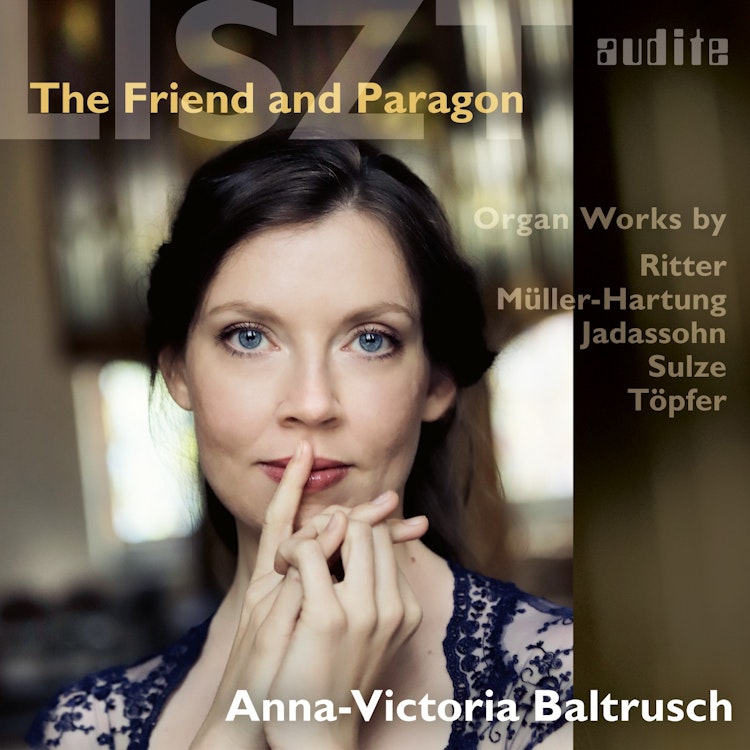
Bernhard Sulze's Concert Fantasia, Op. 63, a set of variations on a theme by Franz Liszt, is one of the most advanced works on this album, featuring increasingly dense and complex writing.
Composer Biography
Carl Müller-Hartung, a composer on this album, was appointed church music director in Weimar at Franz Liszt's suggestion and founded the Grand Ducal Orchestral and Music School, now named after Liszt.
Composer's Artistic Vision
Johann Gottlob Töpfer, a composer on this album, shaped the genre of the romantic choral fantasia by adopting the cyclical multi-movement form rolled into a single movement, a technique also used by Franz Liszt.
Composer Biography
Johann Gottlob Töpfer, an organist and organ-building theorist in Weimar, was so admired by Franz Liszt that Liszt led Töpfer's funeral procession.
Performer Biography
Anna-Victoria Baltrusch, the organist on this recording, has won numerous international organ competitions, including the International Organ Competition of the Bach Society Wiesbaden and the St Albans International Organ Competition.
Historical Context
Franz Liszt, after years as a piano virtuoso, settled in Weimar in 1848 to focus on composing and conducting, re-establishing the city as a major European musical center.
Composer Biography
Salomon Jadassohn, a composer on this album, received pianistic training from Franz Liszt in Weimar and later taught harmony, counterpoint, and composition at the Leipzig Conservatoire, where his students included Edvard Grieg and Ferruccio Busoni.
You might also enjoy...
The Wanamaker Grand Court Organ: Peter Richard Conte