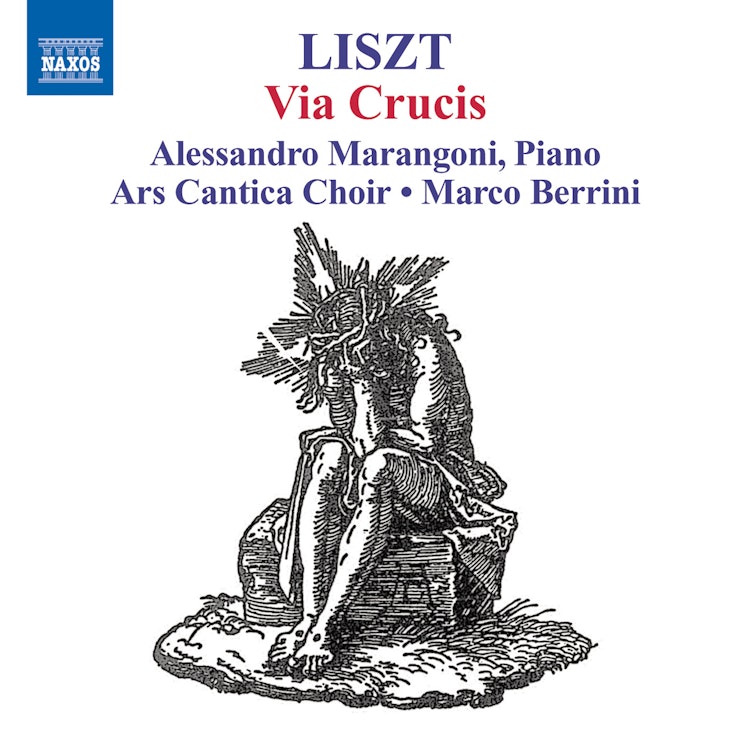
Alessandro Marangoni, the pianist on this recording, graduated with honors in philosophy from the Università di Pavia with a thesis on Fernando Liuzzi's philosophy of music.
Composer's Artistic Vision
Liszt intended the keyboard instrument in Via Crucis to act as the historicus, or narrator, telling the holy story through rhetorical musical figures that evoke each Station's event.
Composition History
Franz Liszt started composing Via Crucis in 1873 and finished it in February 1879, hoping it would accompany the Pope's Good Friday celebration in Rome.
Performer Biography
Marco Berrini, the conductor, is the founding Artistic Director of the professional vocal ensemble Ars Cantica Choir and Consort, which has won numerous national and international prizes.
Notable Performances
Liszt's Via Crucis was never performed during his lifetime; its premiere took place in Budapest in 1929, and it was first published nine years later.
Composer's Artistic Vision
Liszt's 'poetics of evocation' in Via Crucis aims to make listeners relive the events of the Passion through musical themes, similar to the meditative practices suggested by St Ignatius of Loyola.
Compositional Technique
Via Crucis incorporates musical quotations from both Catholic and Lutheran traditions, including the hymn Vexilla Regis prodeunt and Lutheran chorales like O Haupt voll Blut und Wunden.
You might also enjoy...
Dallapiccola / Moevs: Piano Works
Alberto Posadas: Erinnerungsspuren. Zyklus für Klavier
Eric Craven: Entangled States
Francisco Mignone - Valsas
Pictures of Light: Music by William Baines
The Fogg Project
Music of Ramon Zupko
A Composer's Journey
Dane Rudhyar: Piano Works
Blake: The Philosophy of Composition
Kenneth Hesketh: Horae (Pro Clara)
Christian Wolff: Look She Said (Complete Works for Bass)