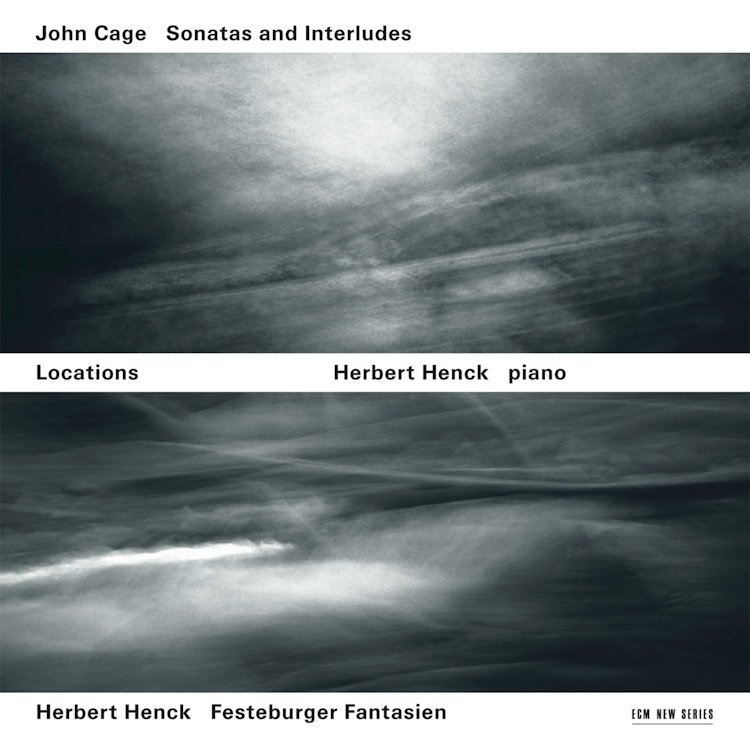
Locations - John Cage: Sonatas And Interludes / Herbert Henck: Festeburger Fantasien
4/22/2003, 37 Tracks, 2:24:10
Featuring
Herbert Henck
John Cage
Did you know?
1/7
Composer's Artistic Vision
John Cage, fascinated by Eastern philosophy, aimed to create music that was surprising even to himself, stating, "I write in order to hear something I haven't yet heard."
Composer Biography
Arnold Schoenberg, one of the seminal composers of the twentieth century, described John Cage as "an inventor of genius" rather than a composer.
Compositional Technique
John Cage's prepared piano transforms the instrument into a percussion ensemble, sometimes resembling a Balinese gamelan orchestra due to altered tuning and microintervals.
Composition History
The invention of the prepared piano by John Cage in 1940 was not from theoretical research, but from the practical need to create percussion sounds for a dancer in a small theatre.
Cultural Impact
The Sonatas and Interludes were inspired by the writings of Ananda Kentish Coomaraswamy, a Ceylon-born art historian and religion scholar, who believed art should communicate spiritual content.
Composer's Artistic Vision
John Cage intended his Sonatas and Interludes to express the "permanent emotions" of Indian tradition, such as the heroic, erotic, and wondrous, aiming for tranquility.
Recording & Production
The Festeburg Fantasies were recorded in the Evangelische Festeburgkirche (Mighty Fortress Church) in Frankfurt/Main, using two concert grand pianos for the improvisations.
You might also enjoy...
Niemann: Piano Music, Vol. 3
Masques
Réminiscences
Piano Music for the Left Hand
As You Like It
Pianoforte In Green
Tchaikovsky & His Friends: Russian Piano Music
The Vienna School: Teachers and Followers: Arnold Schönberg