Mozart's Variations, based on popular folk songs, demonstrate his ability to extract significant moods and expressive potential from simple melodies, going beyond standard figurative variations.
Composer's Artistic Vision
Mozart's music, particularly in his chamber works, engages with genre norms and presents a rich discourse, balancing originality with convention.
Compositional Technique
In the Violin Sonata in E-flat major (K. 302/293b), Mozart surprises contemporary audiences by omitting a third and fourth movement, concluding the work in two movements.
Composition History
In 1778, Wolfgang Amadeus Mozart decided to compose duets for violin and piano, including a half-dozen sonatas (K. 301-306), as a departure from his usual commissioned works.
Critical Reception
Mozart's early violin and piano duets faced difficulties in gaining acceptance, with publishers in Mannheim and Paris proving unreceptive to his ideas and fee demands.
Composer's Artistic Vision
Mozart's father, who trusted in authority, initially warned him against too much independence, causing Mozart to slowly gain his artistic autonomy.
Performer Biography
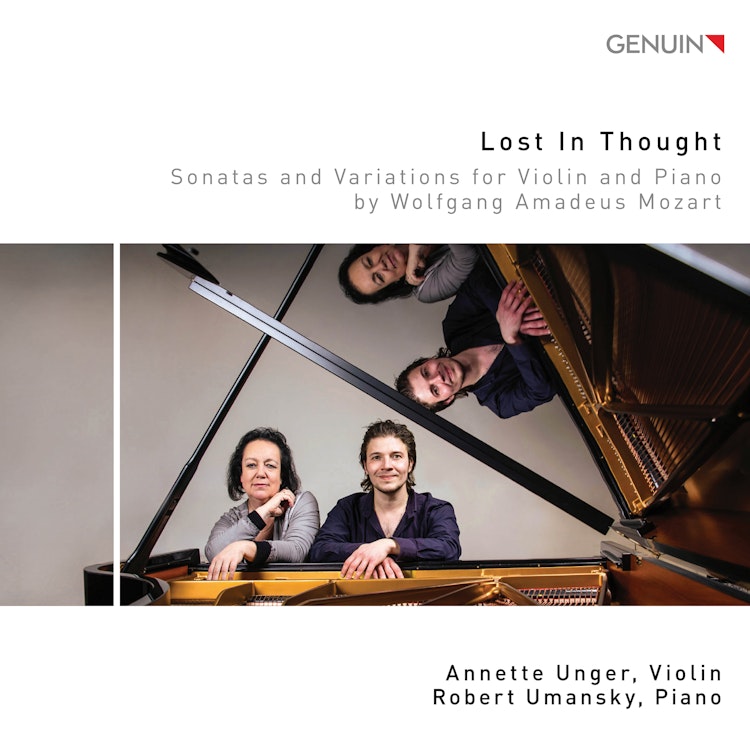
Annette Unger, a soloist and chamber musician, was appointed as one of the youngest violin professors at the Hochschule für Musik Carl Maria von Weber Dresden in 1992.
You might also enjoy...
Mozart: Sonatas & Variations for Piano & Violin, Vol. 1
Mozart: Sonatas for Piano and Violin, Vol. 2
Mozart: Berühmte Violinsonaten
Mozart Complete Sonatas & Variations for Piano & Violin