Chopin associated the funeral march movement of his Sonata in B flat minor with mourning for occupied Poland and his family, and, being superstitious, wanted to distance his name from the word 'funeral'.
Compositional Technique
Chopin radically expanded the scherzo form, moving it from an internal movement in a sonata or symphony to an independent piece.
Compositional Technique
Chopin's early nocturnes, like the Nocturne in E minor, Op. 72 No. 1, were influenced by John Field's solo piano nocturnes, which were essentially 'songs without words' with a lyrical mood over a left-hand accompaniment.
Composer's Artistic Vision
Chopin's scherzos, unlike the jocular meaning of the word, reflect his preference for darker emotions.
Composition History
Chopin initially published the third movement of his Sonata in B flat minor as 'Marche funèbre' but later changed it to simply 'Marche' due to his dislike for descriptive titles.
Composition History
When Chopin began composing nocturnes, the term 'Nocturne' primarily referred to a vocal piece for multiple voices, similar to a romance.
Interpretation
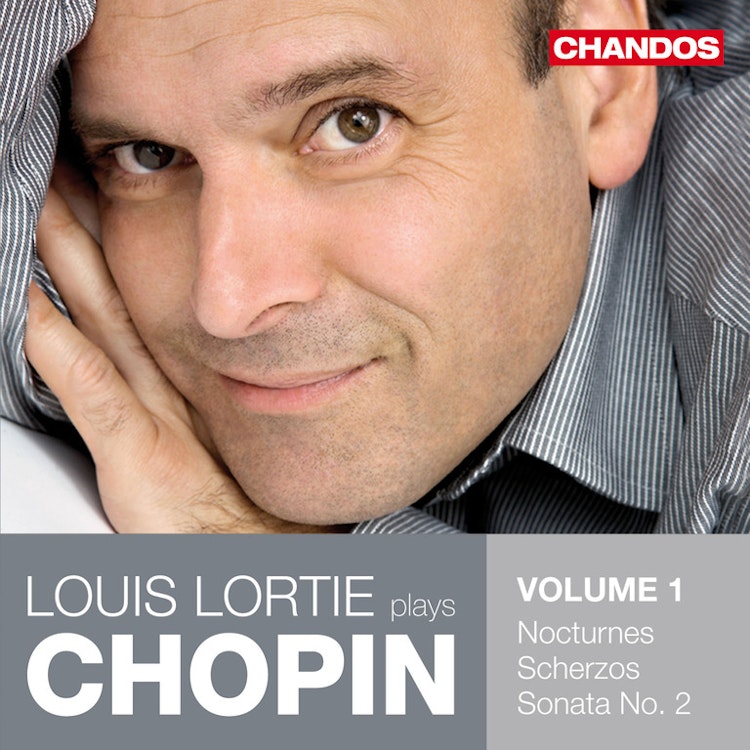
Pianist Louis Lortie plays a nocturne before a major Chopin composition on this album to emulate the lost art of improvising in the same key before a piece, making the nocturnes feel more like improvisations.