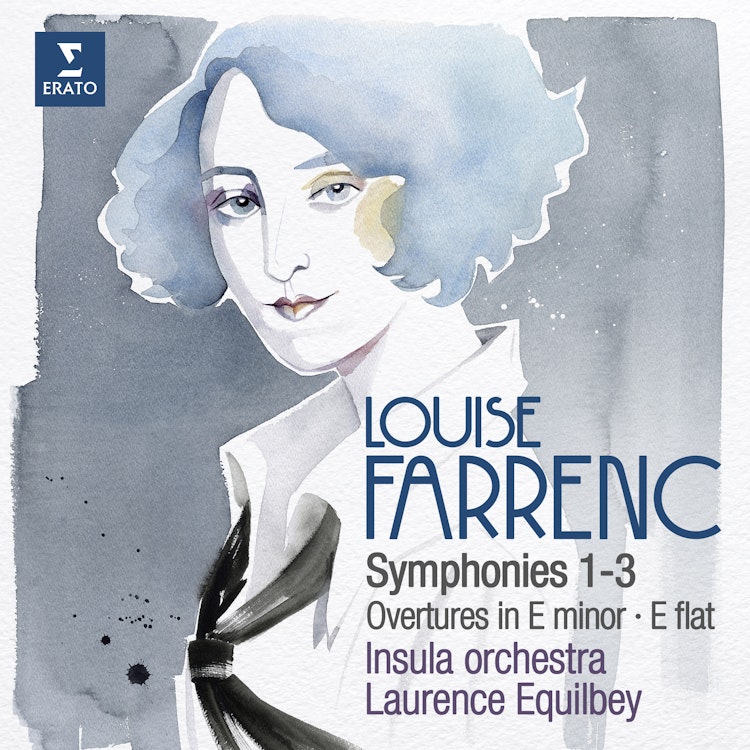
Louise Farrenc: Symphonies Nos. 1-3, Overtures Nos. 1 & 2
4/28/2023, 14 Tracks, 1:53:30
Featuring
Laurence Equilbey
Insula Orchestra
Louise Farrenc
Did you know?
1/7
Historical Context
In 19th-century Paris, the symphony was considered a 'German' genre, and French composers often struggled to have their orchestral works performed.
Compositional Technique
Farrenc's Second Symphony's fourth movement includes a 100-bar fugato and a brief Andante, with an archaic tone that pays tribute to J.S. Bach.
Cultural Impact
After her daughter's death, Farrenc and her husband compiled "Le Trésor des pianistes," a 23-volume anthology of piano music from the 16th to 19th centuries, pioneering early music revival.
Critical Reception
A Parisian critic, Henri Blanchard, praised Farrenc's Third Symphony in 1849, stating her talent surpassed other women composers and rivaled men.
Composer Biography
Louise Farrenc was the second-ever Professor of Piano at the Paris Conservatory and fought for equal pay with her male colleagues.
Composer's Artistic Vision
Farrenc's music, influenced by her teachers Reicha and Hummel, created a unique niche in the symphonic repertoire, blending French and German styles.
Interpretation
This recording is the world premiere of Louise Farrenc's complete symphonic music performed on period instruments, reflecting her own interest in 'early' music.