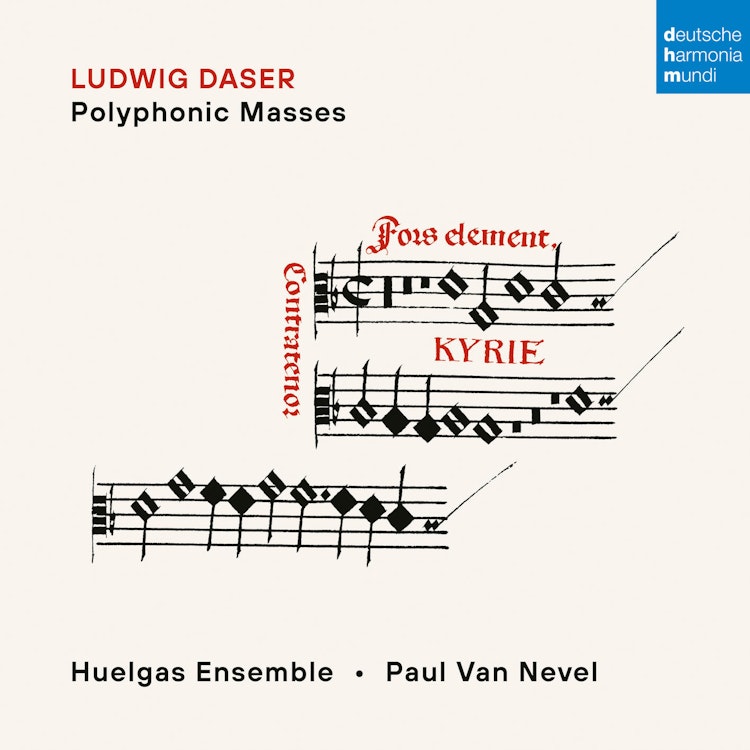
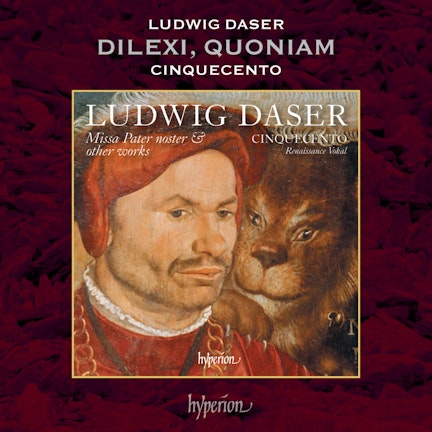
This album is a world premiere recording of Ludwig Daser's Polyphonic Masses.
Interpretation
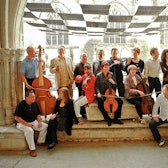
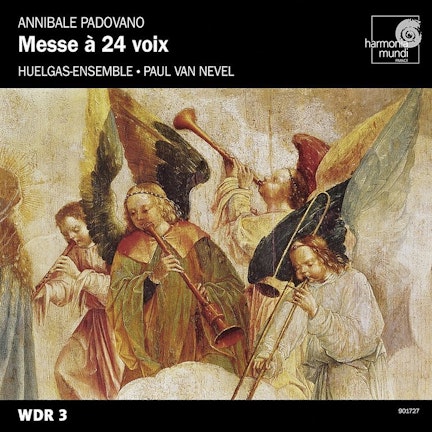
The Huelgas Ensemble performs Daser's Masses with multiple voices per part, a historically authentic approach that reflects the practice of court chapels in the 16th century.
Composer's Artistic Vision
Daser's move to the Protestant court in Stuttgart changed his compositional output, shifting from Masses to hymns, psalms, German sacred songs, and motets.
Historical Context
Daser's dismissal as Kapellmeister in Munich was likely due to his sympathy for Protestantism, which was unacceptable in the arch-Catholic city by 1571.
Compositional Technique
Daser's polyphonic style evolved in Stuttgart, moving from standard four-part harmony to a more monumental style often featuring six, seven, or eight parts.
Composer Biography
Ludwig Daser, a German polyphonist, served as Kapellmeister to Duke Albrecht V of Bavaria and later to the Protestant court of Duke Ludwig in Stuttgart.
Composer Biography
Despite his dismissal, Duke Albrecht V continued to pay Daser a pension until his death, and even extended it to Daser's widow until her death in 1598.