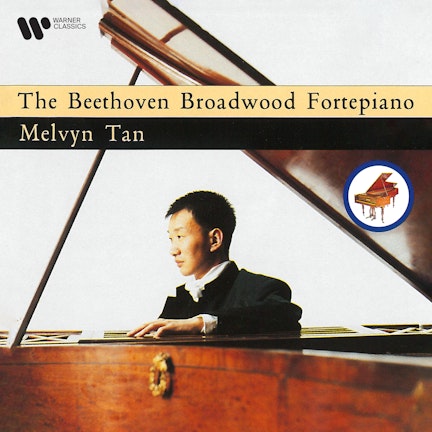
The piano, as a 'modern' instrument, evolved significantly during Beethoven's lifetime, growing from a 5-octave instrument to a more sonorous, extended-range voice of the 19th century.
Compositional Technique
The term 'Bagatelle,' meaning 'trifles,' was applied to several of Beethoven's shorter piano pieces, and does not denote a specific musical form.
Composition History
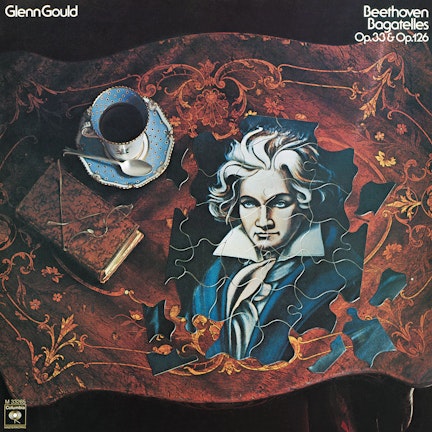
Beethoven's final set of Bagatelles, Op. 126, was composed as entirely new pieces and specifically designed to be played as a cycle, which he titled 'Zyklus von Kleinigkeiten' ('Cycle of Little Trifles').
Composer Biography
Beethoven's earliest known composition was a set of Variations on a March of Dressler for the piano, an instrument he continued to write for throughout his life.
Composition History
Beethoven's Bagatelles, Op. 126, dating from 1823/4, represent his last major piano score, following immediately after the Missa Solemnis and the Choral Symphony.
Composer's Artistic Vision
Beethoven's Bagatelles, originating as experimental treatments of simple melodic or rhythmic motifs, would likely have been called 'Etudes' by a later generation.