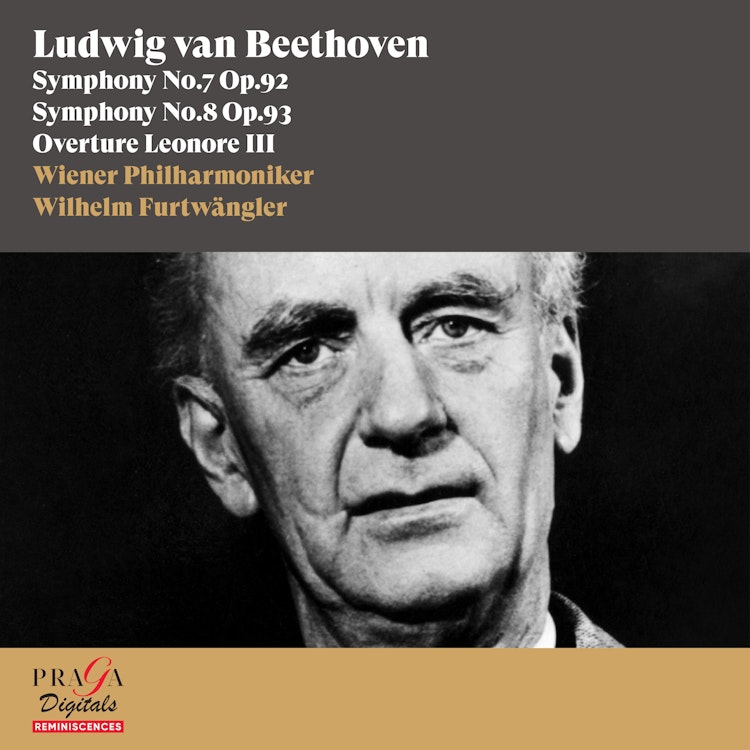
Ludwig van Beethoven : Symphonies No. 7 & No. 8, Overture Leonore III
5/1/2016, 9 Tracks, 1:19:20
Featuring
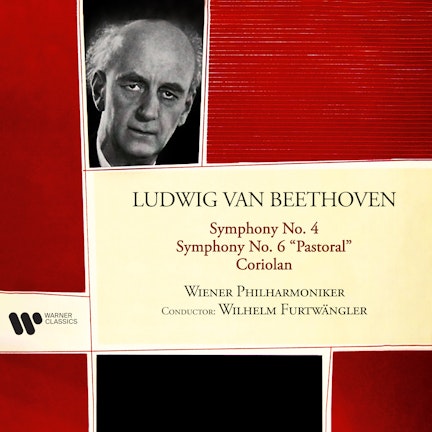
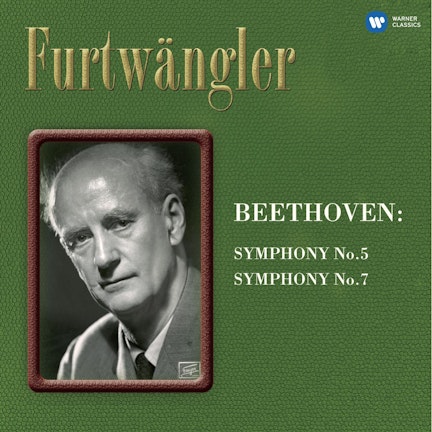
Wilhelm Furtwängler
Wiener Philharmoniker
Ludwig van Beethoven
Did you know?
1/7
Performer Biography
Wilhelm Furtwängler became the director of the Leipzig Gewandhaus Orchestra and the Berlin Philharmonic Orchestra in 1922, succeeding Arthur Nikisch.
Composer's Artistic Vision
Beethoven considered his Symphony No. 7 "one of my most important," an assessment few would argue with.
Performer Biography
Wilhelm Furtwängler resigned his post in December 1934 for political reasons, having been criticized by the National Socialist regime for employing numerous Jewish artists.
Composition History
Beethoven composed three different overtures for his opera Leonore (later Fidelio), with Leonore No. 3 being the most splendid.
Recording & Production
The recordings on this album are from live performances in Vienna (1944, 1950) and Salzburg (1954), with the exception of Symphony No. 7 which is a studio recording.
Performer Biography
Wilhelm Furtwängler, the conductor on this album, was the son of archaeologist Adolf Furtwängler and grew up in a humanistically influenced home in Munich.
Compositional Technique
The Symphony No. 8, affectionately called 'the little one' by Beethoven, is remarkably concise and lucid, with its four movements presented as two 'matched pairs'.