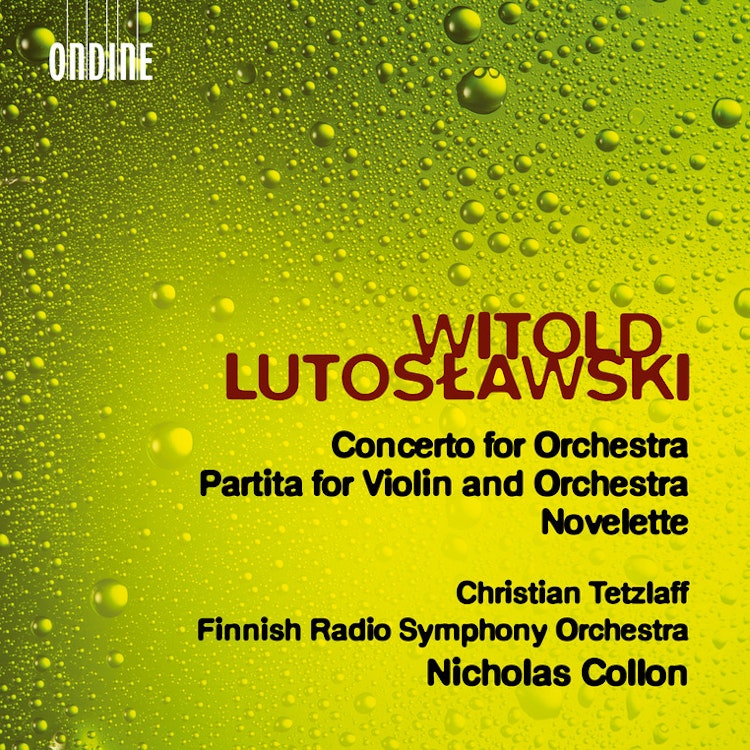
Lutoslawski: Concerto for Orchestra; Partita for Violin and Orchestra; Novelette
11/3/2023, 13 Tracks, 59:58
Featuring
Nicholas Collon
Christian Tetzlaff
Jouko Laivuori
Finnish Radio Symphony Orchestra
Witold Lutosławski
Did you know?
1/7
Composer Biography
Witold Lutosławski, a Polish composer, was one of the most prominent creative musicians after World War II.
Critical Reception
Lutosławski's Concerto for Orchestra was a huge success at its 1954 premiere, establishing him as the most significant Polish composer since Karol Szymanowski.
Performer Biography
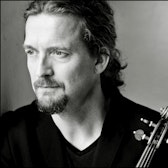
Christian Tetzlaff, the violinist on this album, is known for his extensive repertoire, performing around 100 concerts annually, and for championing both forgotten masterpieces and new works.
Composition History
Lutosławski's Concerto for Orchestra was influenced by Béla Bartók's Concerto for Orchestra, with Lutosławski stating Bartók's influence on him was immense.
Compositional Technique
Lutosławski developed 'aleatoric counterpoint' or 'restricted aleatorics', a technique where individual musicians play parts that don't need exact synchronization, as if playing alone.
Historical Context
Lutosławski used folk music elements in his early period, possibly as a way to balance the official Socialist Realism arts policy, which emphasized clarity, with his own expressive ambitions.
Composer's Artistic Vision
Lutosławski's career evolved through a Neo-Classical period, a transition to fully chromatic twelve-tone music, and then to aleatoric counterpoint, with his late works featuring more nuanced harmony and expressive melodic writing.
You might also enjoy...
Lutoslawski: Orchestral Works
Lutoslawski: Symphonies 1 & 2 [Gemini Serires]
1927-1929: Brücken aus dem Gestern (Orchesterwerke jüdischer Komponisten)
Shadow of Stalin - Ligeti: Concert Romanesc / Husa: Music for Prague / Lutoslawski: Concerto for Orchestra
Tansman: Concerto for Orchestra / Etudes for Orchestra
Tansman: Concerto for Orchestra / Etudes for Orchestra
McPhee: Tabuh-tabuhan - Ung: Inner Voices - Harrison: Suite for Symphonic Strings
Villa-Lobos: Bachianas Brasileiras Nos. 2-4
Ung: Inner Voices / McPhee: Tabuh-Tabuhan / Harrison: Suite for Symphonic Strings
Kalman: Csardasfurstin (Die) (The Gypsy Princess)
Lutoslawski: Concerto for orchestra - Brahms: Piano Quartet in G Minor