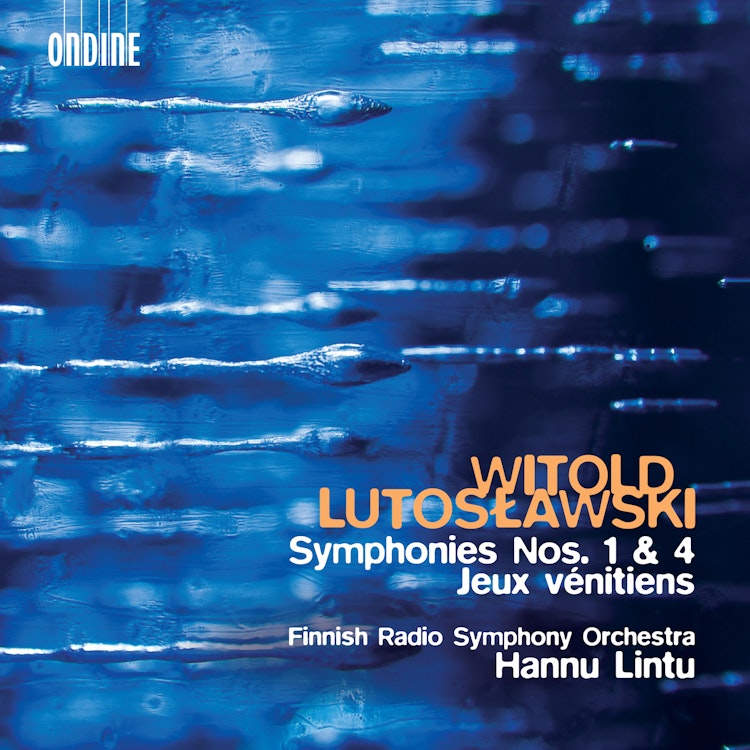
Lutosławski: Jeux vénitiens & Symphonies Nos. 1 and 4
11/9/2018, 9 Tracks, 57:23
BBC Music Magazine Award Nominee 2020.
Featuring
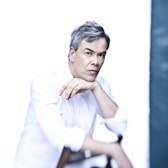
Hannu Lintu
Finnish Radio Symphony Orchestra
Witold Lutosławski
Did you know?
1/7
Compositional Technique
Lutosławski's 'controlled aleatorism', first used in Jeux vénitiens, involves precisely written individual parts whose synchronization is left to the performers, creating an elastic, free sound without a discernible pulse.
Critical Reception
The premiere of Lutosławski's First Symphony in Katowice in April 1948 brought him to the forefront of Polish music, but later performances faced criticism and outrage from Soviet delegates due to 'formalism'.
Composer Biography
Lutosławski's Fourth Symphony, his last large-scale work, was composed between 1988-92, and he conducted its premiere in Los Angeles in February 1993, a year before his death from cancer.
Compositional Technique
Witold Lutosławski's First Symphony is rooted in Neo-Classicism, using frequent counterpoint, often in the form of canons, but without folk music elements common in his later works.
Composition History
The stimulus for Lutosławski's stylistic breakthrough came from hearing John Cage's Piano Concerto on the radio in March 1960, inspiring his 'controlled aleatorism'.
Compositional Technique
From his Second Symphony onwards, Lutosławski used a continuous two-part symphonic form where an introductory first part is followed by a more decisive second part, often designed to resolve frustration built in the first.
Composer's Artistic Vision
Lutosławski rejected the idea that his First Symphony reflected the worldwide conflict of its genesis, emphasizing his music was absolute and independent of external world links.
You might also enjoy...
Shostakovich: Symphony No. 4 & Symphony No. 11
Tubin: Complete Symphonies, Vol. 4 (Nos. 8 and 1)
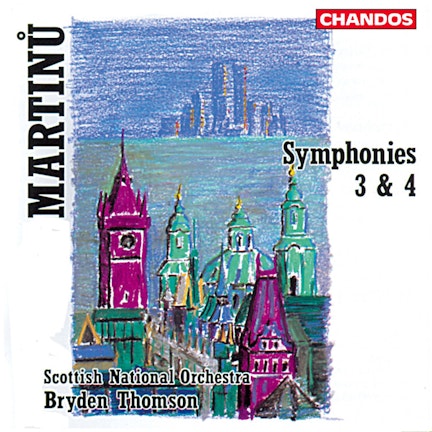
Martinů: Symphony No. 3 & Symphony No. 4
Schuman: Symphony No. 6 in One Movement - Piston: Symphony No. 4
Hartmann: Sinfonien No. 5 & 6
Tubin: Complete Symphonies, Vol. 3 (Nos. 4 and 7)
Dmitri Schostakowitsch: Symphonies Nos. 1 and 6 (Berlin Symphony, K. Sanderling)