BBC Music Magazine Choice. Grammy Awards 2021 – Nominated.
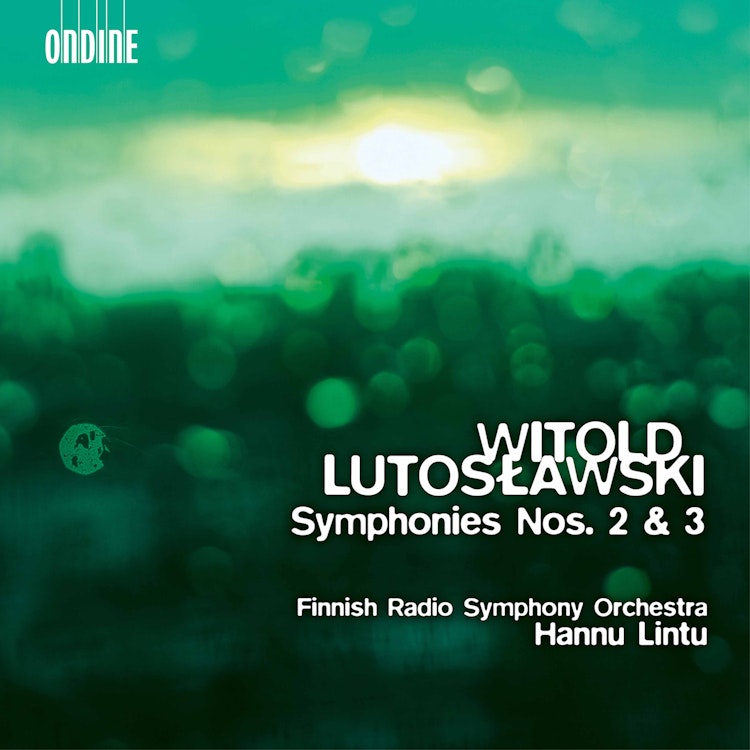
In the second installment in their Lutosławski symphony cycle, the Finnish Radio Symphony Orchestra and Hannu Lintu play the Second and Third Symphonies – two of the most fascinating and enduring symphonies written in the later 20th century. Typical of Lutosławski's style, both use his "limited aleatorism" technique while also showing his fondness for dazzling orchestral colour.
Featuring
Hannu Lintu
Finnish Radio Symphony Orchestra
Witold Lutosławski
Did you know?
1/6
Composer's Artistic Vision
While Lutosławski generally disdained political associations with his music, he admitted a subconscious connection between his Third Symphony and the political turmoil in Poland during the early 1980s.
Compositional Technique
In Lutosławski's aleatoric counterpoint, the conductor does not conduct in the traditional sense but only indicates when to change from one passage to the next.
Compositional Technique
Lutosławski developed a radical new composition technique called 'aleatoric counterpoint' or 'limited aleatorics,' where performers' parts are precisely notated, but their synchronization is left with some freedom.
Critical Reception
Lutosławski's Third Symphony, premiered in 1983, received unanimous critical acclaim and quickly became one of the most frequently performed contemporary orchestral works.
Composition History
Lutosławski's Second Symphony was commissioned by the Norddeutscher Rundfunk (a German radio network) in 1965-1967 to celebrate its 100th concert of contemporary music.
Composer's Artistic Vision
Witold Lutosławski expanded the concept of symphonic music by replacing traditional thematic development with an idiosyncratic musical dramaturgy, creating a modernized version of the genre.