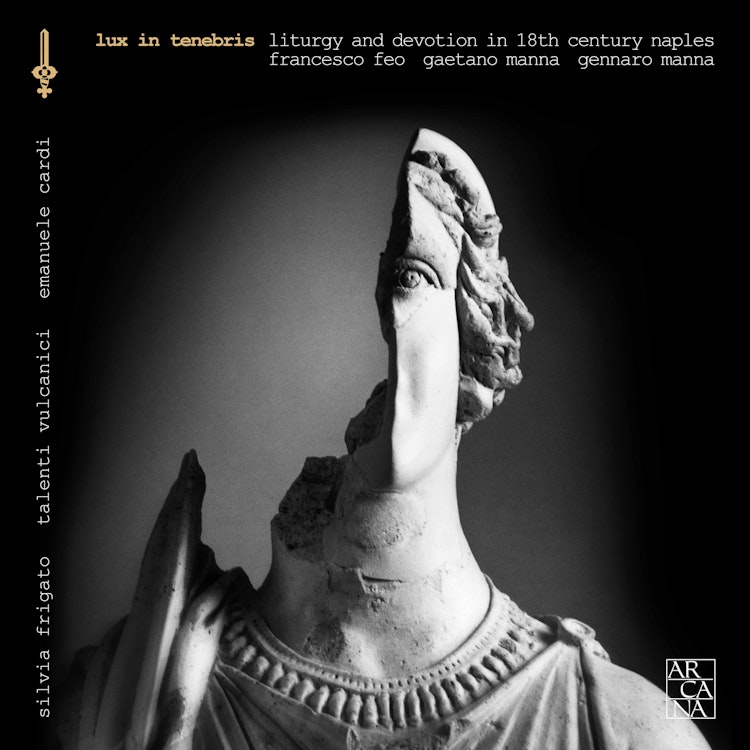
18th-century Naples was rich in religious venues like churches, convents, and chapels, all of which hosted musical activities for major festivities.
Composer's Artistic Vision
Giovanni Battista Gennaro Grossi, an early historian of Neapolitan music, described Gennaro Manna's sacred works as 'solemn, majestic and pious in style,' with clear words and lively moments that avoid operatic excess.
Compositional Technique
Gennaro Manna's Lamentation for Maundy Thursday uses verses from the Lamentations of Jeremiah, which maintain the Hebrew acrostic structure in their Latin version.
Composer Biography
Francesco Feo, Gennaro Manna, and Gaetano Manna all served as chapel master at the Church of Santa Maria delle Anime del Purgatorio in Arco, a church in the heart of old Naples.
Recording & Production
This album was recorded in November 2015 at the Chiesa della Missione ai Vergini in Naples, Italy.
Composer Biography
The composers on this album, Francesco Feo, Gennaro Manna, and Gaetano Manna, represent a musical family tradition: Feo was Gennaro's uncle, and Gennaro was Gaetano's uncle.
Compositional Technique
To avoid monotony when repeating Hebrew letters in the text, Gennaro Manna used different compositional solutions, such as brief introductions, extended sections, and varied emphasis.
You might also enjoy...
Lobt Gott ihr Christen allzugleich: Baroque Bass Cantatas
Music of the Crusades
Handel: Opera Arias
Capstone Collection: The McLean Mix: Rainforest Images