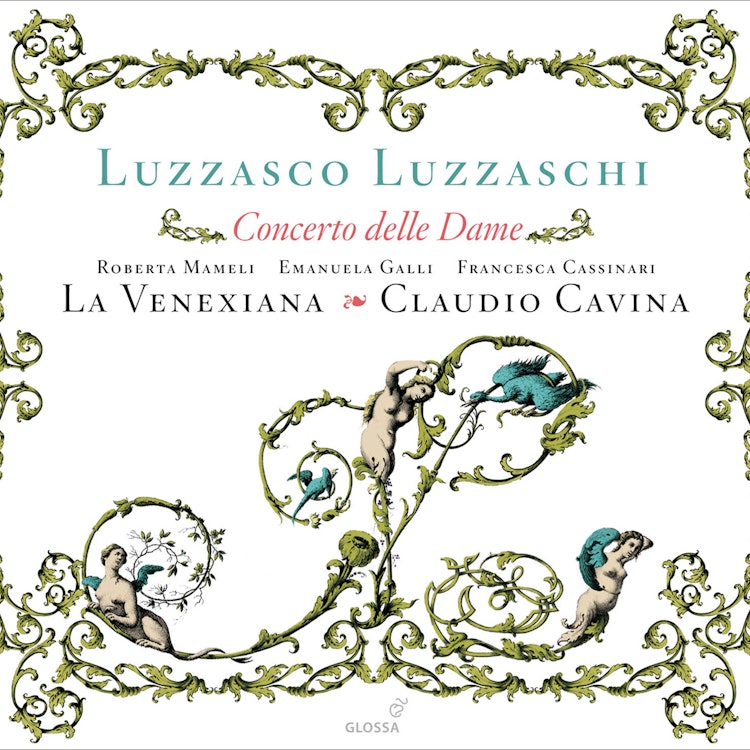
Luzzaschi: Madrigali … per cantare et sonare a uno, e doi, e tre soprani
10/4/2011, 17 Tracks, 53:40
Featuring
Claudio Cavina
Roberta Mameli
Emanuela Galli
Francesca Cassinari
Gabriele Palomba
Cristiano Contadin
Marta Graziolino
Davide Pozzi
La Venexiana
Luzzasco Luzzaschi
Lodovico Agostini
Paolo Virchi
Did you know?
1/7
Compositional Technique
Unlike typical a cappella madrigals, the Concerto delle Dame combined voices with instruments, with each of the three ladies excelling on an instrument.
Composition History
The death of Alfonso II, Duke of Ferrara, in 1597, and the subsequent end of Ferrara's autonomy, finally allowed Luzzaschi to publish works previously kept secret for the Concerto delle Dame.
Compositional Technique
The Concerto delle Dame was known for its astonishing virtuosity in ornamented singing, featuring techniques like passaggi, diminuzioni, cadenze, tirate, and trills.
Historical Context
The performances of the Concerto delle Dame were so exclusive that even composers like Alessandro Striggio and Giulio Caccini acted as emissaries to try and uncover their musical secrets for other courts.
Cultural Impact
Despite being shrouded in secrecy, the Concerto delle Dame profoundly influenced new madrigals by composers such as Marenzio, Wert, Monteverdi, and Gesualdo.
Historical Context
The Concerto delle Dame, an ensemble of 'singing ladies' at the court of Alfonso II, Duke of Ferrara, performed as his 'musica secreta', with very few contemporaries allowed to hear them.
Composition History
Luzzasco Luzzaschi's Madrigali a uno, due e tre soprani were originally written years earlier for the Concerto delle Dame, an exclusive ensemble at the court of Alfonso II, Duke of Ferrara.
You might also enjoy...
Ovation, Vol. 3
Mehr als Worte sagt ein Lied
Mehr als Worte sagt ein Lied
Schütz, Buxtehude: Awake O North Wind - German Music from Schütz to Büxtehude
Harp Recital: Galassi, Mara - Dentice, F. / Luzzaschi, L. / Dell'Arpa, G.L. / Mayone, A. / Raimondo, P.P. / Trabaci, G.M. (Il Viaggio Di Lucrezia)
Graham: Force of Nature
Pro Pacem
Adeste Fideles: Christmas Music From Around the World