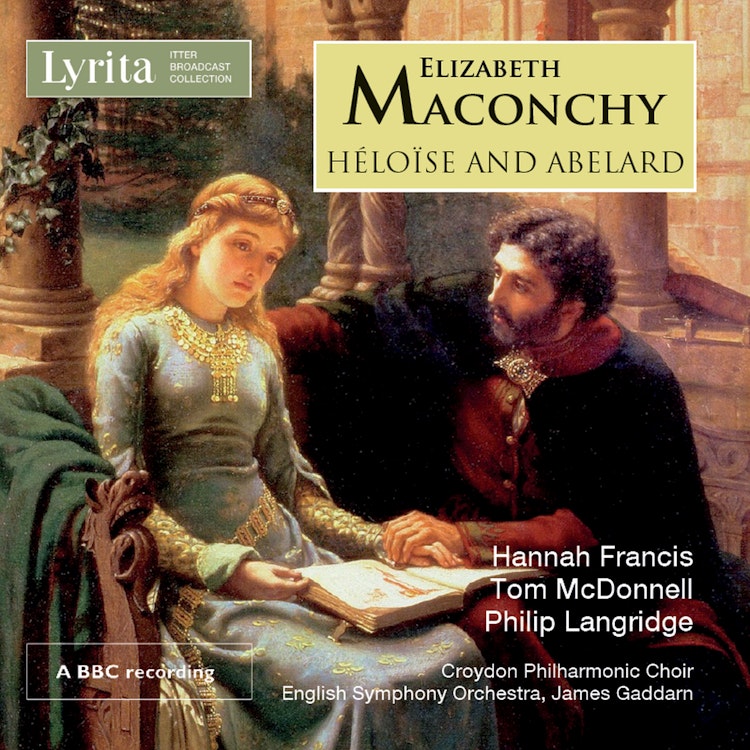
The cantata "Héloïse and Abelard" is scored for soloists, chorus, and a large orchestra, but the forces are rarely heard en masse, allowing for varied instrumental and vocal combinations.
Recording & Production
This recording of "Héloïse and Abelard" was taken from a BBC Radio 3 broadcast of its first live performance on March 3, 1979.
Composition History
The libretto for "Héloïse and Abelard" draws only on historical sources like Peter Abelard's "Historia Calamitatum" and their letters, avoiding fictional works.
Composer's Artistic Vision
Composer Elizabeth Maconchy believed music was an impassioned argument, where new ideas logically derive from an original premise.
Composer Biography
Elizabeth Maconchy was the first woman chairman of the Composers' Guild of Great Britain in 1959 and later became president of the Society for the Promotion of New Music in 1976.
Composition History
Elizabeth Maconchy's dramatic cantata "Héloïse and Abelard" was commissioned by the Croydon Philharmonic Society and written in 1977.
Compositional Technique
Maconchy's "Héloïse and Abelard" uses leitmotifs, including a three-note motif with a falling seventh that accompanies invocations of Abelard's name.