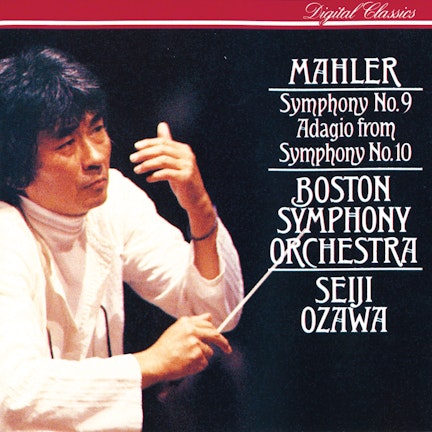
Mahler composed his Tenth Symphony immediately after his Ninth, as a "talisman against the death evoked," though the Ninth remained his last completed work.
Compositional Technique
The second movement of Mahler's Ninth Symphony, marked "In the tempo of a leisurely Landler. Somewhat clumsy and very coarse," is described as a "crazy Scherzo."
Interpretation
Conductor Michael Gielen found the Adagio of Mahler's Ninth Symphony "perhaps less novel than the Burleske," due to its Brucknerian qualities and a near-quote from Bruckner's Ninth.
Compositional Technique
Mahler's Ninth Symphony features an unconventional movement sequence, with slow outer movements and fast inner movements, a near-complete reversal of the usual tempo order.
Composition History
Gustav Mahler tried to avoid numbering his Ninth Symphony as such, due to a superstition that composers often died after completing their ninth symphony.
Compositional Technique
The Burleske movement of Mahler's Ninth Symphony pushes the boundaries of atonality and includes three fugati, paying homage to J.S. Bach amidst a "whirlwind of triviality."