Mahler's own recordings on Welte-Mignon rolls are notable for their extreme tempi and urgent, forward-moving pace, reflecting his fast-paced life.
Instruments
The Welte-Mignon piano system, patented in 1904 by Edwin Welte, was an elaborate pneumatic piano that reproduced dynamic nuances, tempo, and pedal use from perforated paper rolls.
Composer's Artistic Vision
Mahler considered the poetry of Friedrich Rückert, which he set in his Rückert-Lieder and Kindertotenlieder, to be "first-hand poetry," unlike other contemporary works he viewed as "second-hand."
Composer Biography
Gustav Mahler was one of the first major composers to experiment with the Welte-Mignon piano rolls, and by his death in 1911, 140 artists had made recordings using this technique.
Recording & Production
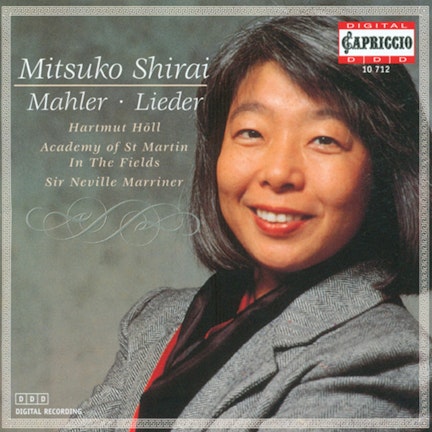
This album includes two versions of Mahler's 'Das himmlische Leben': one with orchestra and another with Gustav Mahler's original accompaniment, 'recorded' on a Welte-Mignon piano.
Compositional Technique
Mahler's lieder often feature cross-connections and interrelationships with his symphonic compositions, with the human voice serving as a fundamental bridge between these two poles of his output.
Composer Biography
Gustav Mahler lost six of his younger siblings in early childhood, a personal tragedy that resonates with the theme of hunger and death depicted in his song 'Das irdische Leben'.
You might also enjoy...
Schubert: Hyperion Song Edition 19 – Songs of Flowers & Nature
Mahler, G.: Lieder
Donizetti Songs Vol. 6
Mahler: Symphony No. 3 & Lieder (Les indispensables de Diapason)